Brainstorming Business Names That Win
It's tempting to jump right into brainstorming fun, clever business names. But that's a classic rookie mistake. The most effective brainstorming sessions happen after you've built a strong brand foundation.
Before you even think about a name, you need to get crystal clear on your mission, your target audience, and your brand's unique personality. This upfront strategic work isn't just busywork; it's the filter that separates a merely clever idea from a name that truly fits your long-term vision.
Want to move from raw ideas to a usable shortlist? Start with the Naming Toolbox to generate, refine, and check business name ideas while your brand foundation is still fresh.
Building Your Brand Foundation Before You Brainstorm
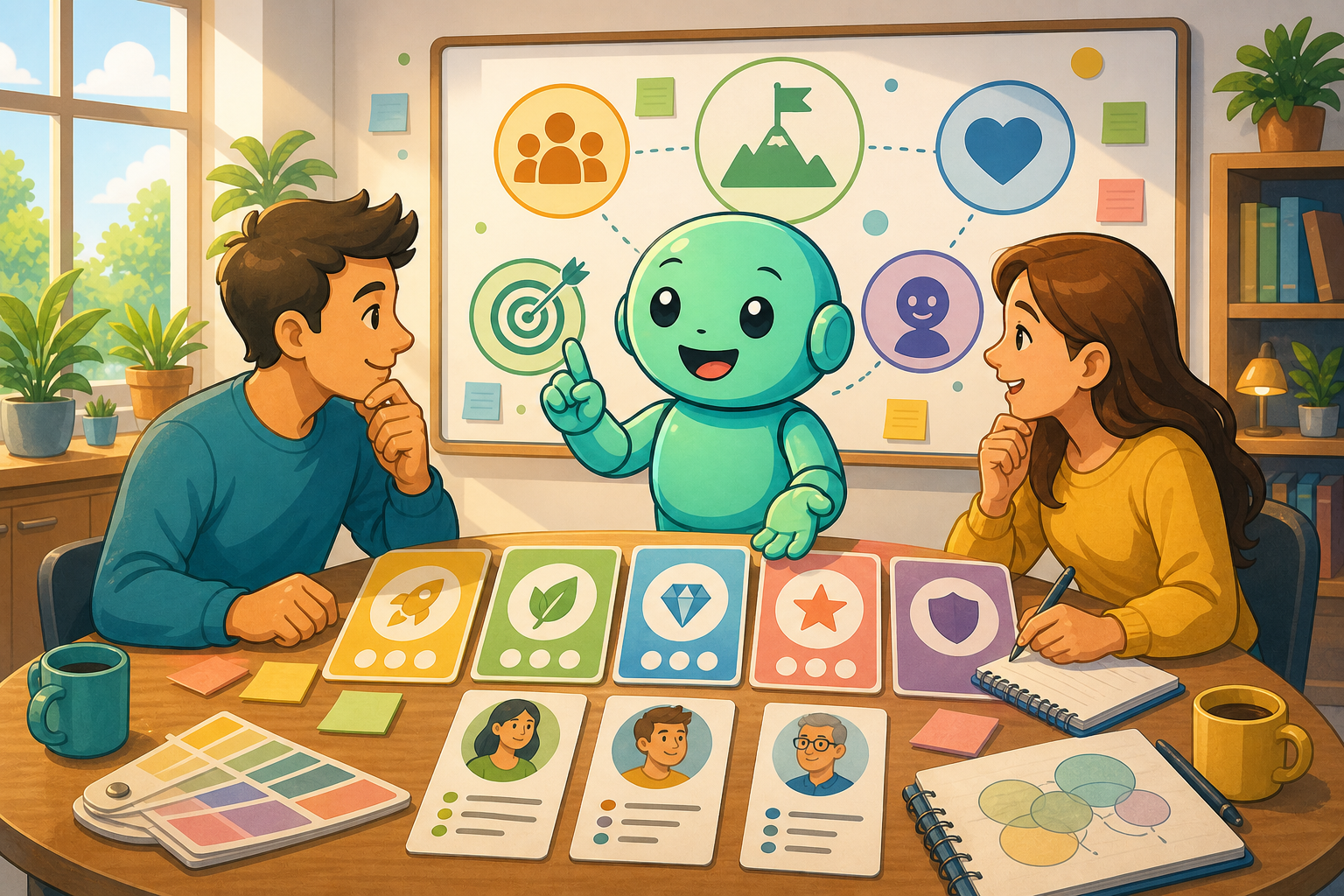
I've seen it happen countless times: entrepreneurs get excited and dive headfirst into a creative naming session. It feels productive, but without a solid foundation, you're just throwing words at a wall and hoping something sticks.
Think about the most iconic brand names. They aren't just catchy; they're deeply rooted in the company's core identity. This foundational stage is like creating a detailed blueprint before you build a house - it ensures everything that follows is stable, coherent, and built with purpose.
First things first, you have to nail down your mission and vision. Why does your company exist beyond making a profit? Answering this question gives you a powerful "why" that will guide every decision you make, especially your name.
Let's say you're starting a sustainable home goods store. You're not just selling products. Your mission might be "to make eco-conscious living beautiful and accessible." This single sentence immediately rules out names that sound cheap, synthetic, or overly corporate. It naturally points you toward ideas that evoke nature, simplicity, and quality.
Define Your Ideal Customer
You can't choose a name if you don't know who you're talking to. Creating a detailed customer persona isn't just a fluffy marketing exercise; it's a critical step in the naming process. You need to go way beyond basic demographics like age and location.
Dig into their psychographics:
- Values: What do they truly believe in? Are they driven by sustainability, convenience, luxury, or affordability?
- Pain Points: What problem are you solving for them? What keeps them up at night?
- Aspirations: What are their goals and dreams? How does your brand fit into the life they want to live?
- Language: How do they talk? Is it formal, casual slang, or full of industry-specific jargon?
A name that resonates with a 22-year-old tech enthusiast will almost certainly fall flat with a 55-year-old corporate executive. A fintech app for Gen Z might get away with a playful, short name like "VibePay," but a wealth management firm for retirees needs something that screams trust and stability, like "Crestview Capital."
A great name should feel like an inside conversation with your ideal customer. If they don't get it, or worse, if it doesn't speak to them, you've missed the mark - no matter how clever you think it is.
Establish a Clear Brand Personality
If your brand walked into a room, who would it be? Defining your brand personality helps you set a consistent tone, not just for your name but for every piece of communication that follows. Are you the playful innovator, the trusted expert, the sophisticated guide, or the rugged adventurer?
I often find it helpful to think in terms of archetypes:
- The Sage: Knowledgeable, trustworthy, and wise (think Google or Mayo Clinic).
- The Jester: Fun-loving, playful, and humorous (like Ben & Jerry's or Old Spice).
- The Hero: Courageous, inspiring, and competent (think Nike or FedEx).
- The Innocent: Simple, optimistic, and honest (like Dove or Coca-Cola).
Picking an archetype gives your brainstorming a clear direction. A "Jester" brand can explore punny or quirky names, while a "Sage" brand should lean toward names that sound classic and authoritative. This framework stops you from accidentally picking a name that clashes with the experience you want to create.
By investing time in this foundational work, you create a powerful filter. It turns a chaotic process into a strategic one, ensuring the name you ultimately choose isn't just a label, but the first chapter of your brand's story.
Unlocking Creative Naming Techniques That Work
Once you've locked in your brand's foundation, it's time to roll up your sleeves and start the creative work. This is the part where you move from abstract strategy to a long list of tangible name ideas. The mission right now isn't to find "the one" - it's to generate a massive pool of options.
Seriously, think quantity over quality at this stage. You need raw material to work with. A longer list gives you more to combine, refine, and play with later on. I always tell my clients to aim for at least 50-100 initial ideas before even thinking about cutting any.
Mind Mapping Your Brand Universe
One of the most effective ways to get the ideas flowing is mind mapping. It's a visual technique that helps you see connections that a simple, linear list just can't.
Start with your core brand concept in the middle of a page. From there, just branch out with related words, concepts, feelings, and images.
Let's imagine a coffee brand all about productivity. You could start with "Focus Fuel" in the center. Your branches might look something like this:
- Words for Focus: Clarity, Sharp, Laser, Precision, Flow
- Productivity Ideas: Grind, Hustle, Boost, Amp, Ignite
- Coffee Lingo: Roast, Bean, Brew, Aroma, Crema
- Feelings: Alert, Driven, Accomplished, Energized
This process shakes loose words you wouldn't have thought of otherwise. Suddenly, you're combining "Clarity" and "Brew" to get "Clarity Brew Co." or "Ignite" and "Roast" for "Ignite Roasters." The visual map forces you to break out of rigid, straight-line thinking, which is exactly what you need for a creative breakthrough.
A pro tip: The best names often hide in the second or third layer of a mind map. They're the ideas that aren't immediately obvious but are still deeply tied to your brand's core. Don't be afraid to follow a tangent.
A Practical Look at Naming Techniques
Brainstorming isn't a one-size-fits-all process. Different techniques produce different types of names, and knowing which to use can steer your creativity in a more productive direction. Think of these as different tools in your naming toolkit.
Here's a breakdown of the most common naming approaches to help you decide which path makes the most sense for your brand.
| Technique | Best For | Example Application | Potential Outcome |
|---|---|---|---|
| Descriptive | Businesses where absolute clarity is essential and the offering is easy to understand. | A company selling all-natural, organic dog food needs customers to get it instantly. | "Organic Paws" or "PureBites Dog Food." The benefit is crystal clear, but names like this can be tough to trademark. |
| Evocative | Brands aiming to build a powerful emotional connection or tell a bigger story. | A travel company focused on rugged adventure and self-discovery. | "Patagonia" or "Nomad." These names don't describe the product; they create a feeling and a lifestyle. |
| Invented | Tech companies or brands entering crowded markets where a unique, ownable name is critical. | Creating a totally new word that's easy to say, spell, and remember. | "Kodak" or "Zillow." You start with a blank slate, which requires more marketing effort to build meaning. |
| Lexical | Brands that want a clever, memorable name using puns, compound words, or altered spellings. | A social media scheduling tool could use a play on words related to time, broadcasting, or planning. | "Buffer" or "Hootsuite." These are often catchy, highly brandable, and memorable. |
Choosing a category depends entirely on your brand's personality and your position in the market. A high-end fashion label will likely lean toward an evocative name, while a B2B software company might do better with something descriptive or invented.
Using the SCAMPER Method to Remix Your Ideas
Another fantastic tool is the SCAMPER method. It's a classic creativity framework that forces you to look at your existing ideas from different angles. It's an acronym for: Substitute, Combine, Adapt, Modify, Put to another use, Eliminate, and Reverse.
Let's apply it to a generic name for a tech support company, like "Tech Help."
- Substitute: What can you swap out? Instead of "Help," try "Guard," "Geek," or "Gurus." That gives you "TechGuard" or "GeekPatrol."
- Combine: Can you merge two concepts? Combine "Tech" with "Relief" or "Solutions" to get "TechRelief" or "Solutech."
- Adapt: Can you borrow an idea from another industry? Think about emergency services. This could spark names like "The Tech Response" or "Digital 911."
- Modify: How can you change the scale or form? Magnify the benefit to get "Total Tech Care." Or minimize the problem with "Pixel Perfect."
- Put to another use: Can you frame the words differently? "Help" is a verb, but what if your name implied a helpful place, like "The Tech Hub"?
- Eliminate: What can you remove? Shorten "Tech Help" to something sleek like "Helio" or "Techa."
- Reverse: Can you flip the order or concept? Instead of solving problems, your name could suggest preventing them, like "Proactive Tech."
This structured approach is brilliant for pushing you out of a creative rut and generating names that are far more inventive than the obvious, descriptive ones.
The journey from a cloud of keywords to a single, powerful name is a process of expansion and then careful, strategic reduction.
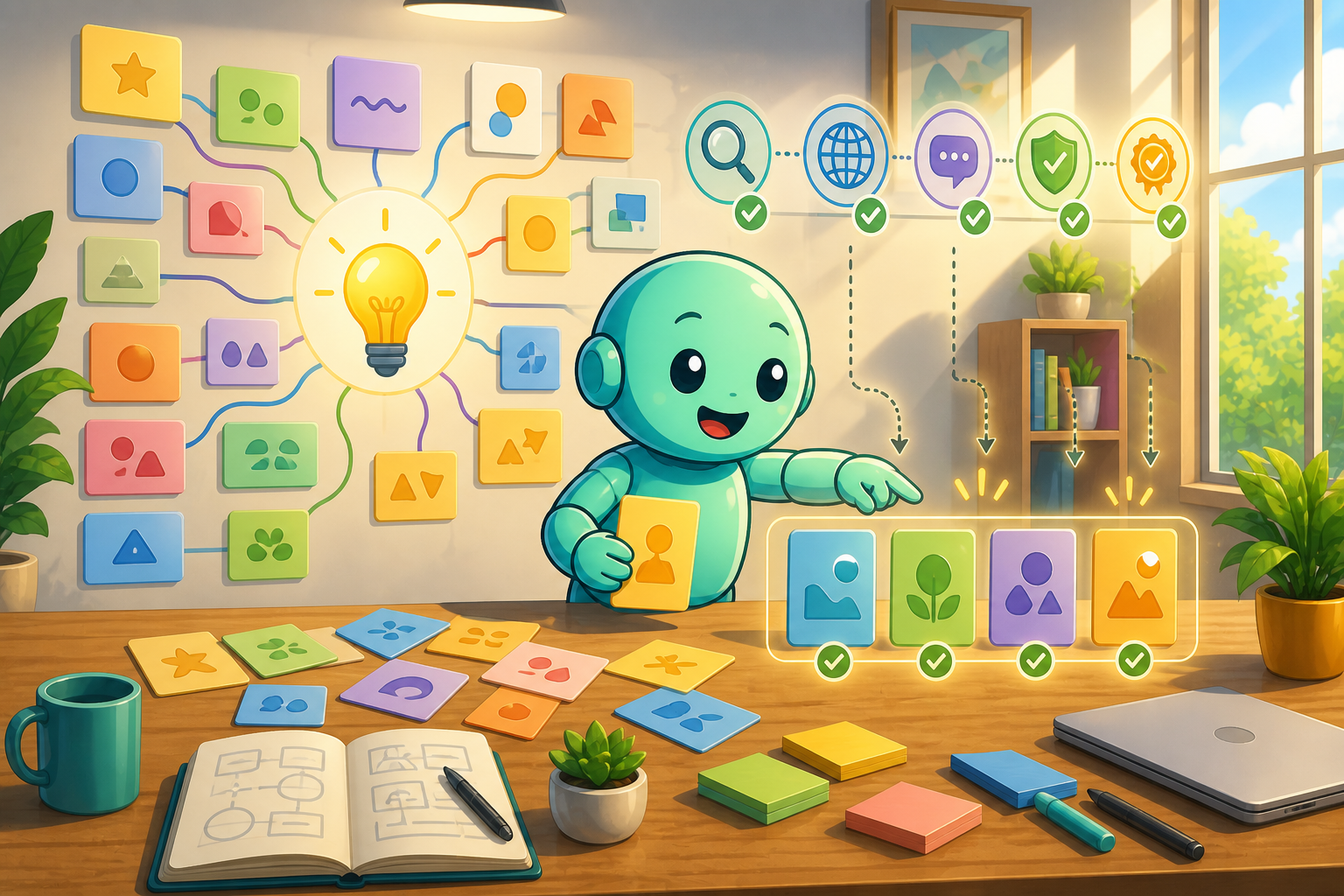
This process ensures that the names you end up with are the strongest and most aligned with your brand. By consciously exploring different categories and methods, your list of potential names will be far richer and more varied, giving you the best possible options to choose from.
If you feel your creative well running dry, you can always explore more sources for naming inspiration to keep the momentum going.
Securing Your Digital Identity in a Crowded Market
You can dream up the most clever, catchy, and memorable business name on the planet, but if you can't own it online, it's practically useless. In today's world, your digital identity - your domain name and social media handles - is your storefront, your business card, and your main line to customers, all in one.
This is exactly why you have to bake digital availability checks into your brainstorming, not save them for the end. There's nothing worse than falling in love with a name, only to discover the ".com" is long gone. That kind of disappointment can kill your momentum and send you right back to square one.
And make no mistake, the digital real estate market is fierce. As of the first quarter of 2025, there were roughly 368.4 million domain registrations across all top-level domains (TLDs). The classic .com and .net domains alone made up 169.8 million of those, with a renewal rate over 75%. People are holding onto these assets for the long haul. You can get a better sense of this by exploring the latest data on the domain name industry.
Weave Availability Checks Into Your Creative Process
The smart way to brainstorm names today is with a constant feedback loop. Instead of building a massive list and then checking domains one by one, do it in real-time. This keeps your ideas grounded from the very start.
Think of domain availability as a creative feedback loop, not a final hurdle. Keep the Naming Toolbox Domain Check open while you brainstorm. The second a promising name hits you, check whether the matching domain direction is realistic.
The instant feedback you get - "taken," "available," "here are some alternatives" - can actually spark new ideas. It might push you in a direction you hadn't considered.
This simple habit stops you from getting emotionally attached to names that are already off-limits. It turns what could be a frustrating dead end into another source of inspiration.
What to Do When Your First Choice is Gone
It's going to happen. Your perfect, one-word .com domain will probably be taken. Don't let it throw you; this is just part of the process. The goal now is to find a creative, professional, and brand-aligned alternative.
Here are a few proven strategies I've seen work time and again:
- Add a Verb: If "Apex.com" is taken, try "GetApex.com" or "TryApex.com." This is a classic move in the software and services world because it creates a subtle call to action.
- Modify with a Noun: Add a word that clarifies what you do. If you're a consulting firm named "Clarity," you could try "ClarityConsulting.com" or "ClarityHQ.com."
- Explore a Different TLD: While .com is still king, other Top-Level Domains (TLDs) are gaining serious ground, especially in certain industries.
Your domain name is a long-term investment in your brand's authority and findability. A name that is easy to remember, spell, and type is just as critical as snagging that coveted .com.
Navigating the World of Alternative TLDs
The explosion of new TLDs has opened up a lot of creative avenues. While a .com carries the most authority and trust with the general public, a well-chosen alternative can be just as powerful if it fits your brand.
For instance:
- A tech startup using a .io or .ai domain instantly signals its niche. These are well-respected in the tech community.
- A non-profit can immediately communicate its mission with a .org domain.
- A creative agency or design portfolio might find that a .co or .art domain feels more contemporary and fitting.
But you do need to be careful. Steer clear of obscure or gimmicky TLDs that might confuse customers or make you look less legitimate. TLDs like .biz or .info unfortunately carry a stigma of being lower quality or spammy, which can hurt your credibility right out of the gate.
The trick is to pick a TLD that feels intentional and adds to your brand story, not one that looks like a sloppy second choice. Ultimately, securing a solid digital identity is a mix of creativity, strategy, and pragmatism. By making domain availability a core part of your brainstorming, you guarantee that the brilliant name you land on is one you can actually own and grow for years.
Use Modern Tools to Supercharge Your Brainstorm
While nothing beats the human touch in brainstorming, you don't have to go it alone. Think of modern naming tools as your creative co-pilot. They can massively accelerate how you generate and validate names, helping you find those hidden gems and dodge dead ends much faster.
The secret is to use these tools as an extension of your own creativity, not as a replacement for it. They're brilliant at spotting patterns, mashing up words in surprising ways, and checking domain availability on the fly. This frees you up to concentrate on the bigger picture: how well each name fits your brand strategy.
Let AI Do the Heavy Lifting
Today's AI name generators are a world away from the old keyword mashup tools. The best ones can grasp context, tone, and even abstract concepts, spitting out lists that are often surprisingly creative and on-point. It's no wonder that in 2024, 40% of small businesses are already using AI - a number that's more than doubled in just a year.
The quality of what you get out, though, depends entirely on the quality of what you put in. Don't just type "coffee shop." Feed the AI the core concepts you've already developed.
- Try brand values: "Generate names for a coffee brand that feels warm, community-focused, and artisanal."
- Include your audience: "Suggest names for a productivity app for busy entrepreneurs that sounds efficient and modern."
- Use emotional keywords: "Brainstorm names for a skincare line that evokes feelings of purity, calm, and nature."
This gives the AI the guardrails it needs to produce names that are not just clever, but actually aligned with the brand foundation you're building. For a closer look at the different options out there, check out our guide on the top business name generators for every need.
Treat AI as your tireless brainstorming partner. It can generate hundreds of variations in seconds, giving you a massive pool of ideas to refine. Your job is to curate, not just accept, its suggestions.
Think Beyond the .com
Checking for an available domain name is obviously a critical step, but it's no longer a simple "taken" or "not taken" situation. The digital real estate for names has exploded.
Since 2012, the introduction of new generic top-level domains (ngTLDs) has been a game-changer. With over 1,200 new extensions introduced and nearly 38 million domains registered on them, you have so much more flexibility beyond a traditional .com.
This expansion opens up a whole new layer of creativity in your brainstorming. Consider how these TLDs can actually reinforce your brand identity:
| TLD Extension | Ideal Industry or Use Case | Real-World Vibe |
|---|---|---|
| .io | Tech startups, SaaS companies, and developers. | Signals innovation and a tech-forward approach. |
| .co | Modern businesses, startups, and creative ventures. | A fresh, global alternative to .com. |
| .shop or .store | E-commerce businesses and online retailers. | Clearly communicates the purpose of the site. |
| .app | Mobile applications and software developers. | Directly tells users what your product is. |
Suddenly, a "taken" .com name can be transformed into a viable, even more memorable option. If "Evergreen.com" is gone, what about "Evergreen.eco" or "Evergreen.shop"? These alternatives can add a powerful layer of meaning. The domain check is no longer just a hurdle; it's another opportunity to be creative.
By pairing your shortlists with these modern tools, you create a much more dynamic and efficient naming process. You can generate ideas, test their digital viability, and refine them with instant feedback, making sure the name you ultimately choose is not only brilliant but ready to claim its space online.
How to Validate and Finalize Your Business Name
You've done the creative heavy lifting and now have a shortlist of promising business names. This is where the process shifts from artistry to analysis. Validating a name isn't as glamorous as brainstorming, but it's the critical step that ensures the name you love is also memorable, available, and legally defensible.
Think of this as the final quality check before you invest your time, money, and brand's future into a single name. You're no longer just looking for something that sounds good; you're looking for something that works in the real world.
Run Preliminary Legal Checks
Before you get too attached to any single name, it's time for some basic legal due diligence. You'll want to consult with a legal professional before making a final decision, but you can weed out the obvious non-starters yourself right now. Trust me, the last thing you want is a cease-and-desist letter right when your business is starting to get noticed.
Start with a simple trademark search. In the U.S., you can do this at the United States Patent and Trademark Office (USPTO) website. You can also use the Naming Toolbox Trademark Check as an early screening step. Look for registered trademarks that are identical or confusingly similar to your top choices, especially within your industry.
Don't forget to search for common variations, too:
- Similar spellings: If you're considering "KwikFix," you absolutely need to search for "QuickFix."
- Phonetic equivalents: A name like "For U" could easily conflict with a registered mark for "4U."
- Plurals and singulars: Look for both "Zenith" and "Zeniths."
This initial search isn't a substitute for professional legal advice, but it's an incredibly effective first filter. It will help you quickly identify and eliminate the highest-risk names on your list.
Secure Your Digital Real Estate
In today's market, a great name is almost useless if you can't own the corresponding digital space. This check should happen at the same time as your legal review, because the competition is fierce.
Consider this: there were over 378.6 million domain names registered globally in 2024, with projections hitting 459.9 million by 2030. According to a global domain name industry analysis, we're seeing more than 33,000 new registrations every single day. That staggering number shows just how urgent it is to lock down your digital identity early.
Beyond the domain, check for social media handles across every platform that matters to your brand. The Naming Toolbox Social Check helps you review handle availability across important networks. Brand recognition hinges on consistency, so your goal should be to get the same handle everywhere.
If your ideal name is taken, don't give up on it just yet. See if a simple, logical modifier could work. For example, if "Apex" is gone, "ApexCo" or "GetApex" might be available and just as effective.
Conduct the Say-It-Out-Loud Test
This sounds almost too simple, but it's a step I've seen countless entrepreneurs skip, often to their regret. How does the name sound when you actually say it? A name that looks brilliant on a screen can be a complete mess when spoken over the phone.
Say your top names out loud. A few times. Have a friend say them back to you.
- Is it easy for your target audience to pronounce?
- Is it easy to spell after hearing it? A clever name like "Synergy Solutions" could easily be misinterpreted as "Sinergy Solushuns."
- Are there any weird or unintentional sounds when you say it quickly?
This simple exercise can reveal major communication hurdles before they become a real-world headache for your customers. For more practical advice on this, check out these tips for choosing a strong business name.
Gather Unbiased External Feedback
By now, you and your team are way too close to the project to be objective. You need fresh eyes and ears. It's time to get feedback, but you have to do it the right way to get honest, actionable insights.
Resist the urge to just ask friends and family, "Do you like this name?" Their answers will be biased by their relationship with you. Instead, find people who match your ideal customer profile and ask them specific, strategic questions that dig deeper.
Effective Feedback Questions
| Question | What It Reveals |
|---|---|
| "What kind of company or product do you imagine when you hear this name?" | This tells you if the name is creating the right first impression and industry association. |
| "How would you spell this name after hearing it just once?" | This is a direct test of its phonetic clarity and spelling simplicity. |
| "What feelings or ideas come to mind when you see this name written down?" | This helps you gauge the name's emotional tone and brand personality. |
This kind of structured feedback gives you far more valuable data than a simple thumbs-up or thumbs-down. It helps you understand the name's real-world first impression and uncovers hidden negative connotations you might have missed.
Perform a Final Cultural and Linguistic Check
Finally, if you have any plans to operate internationally - or even just within a culturally diverse market - this check is non-negotiable. A word that sounds great in English can have an embarrassing or downright offensive meaning in another language.
For example, when Ford launched the "Pinto" in Brazil, they didn't realize the word was local slang for "tiny male genitals." Similarly, the classic Irish Mist liqueur ran into trouble in Germany, where "mist" means "manure." These are famous, costly blunders that a quick linguistic check could have easily prevented.
Start with online translation tools for a basic screening. But if you have serious global ambitions, it's worth the small investment to consult with native speakers from your key target markets. This final step ensures your name is built for success, no matter where your business grows.
Common Questions About Naming a Business
Even the most organized naming process hits a few snags. It's totally normal. Let's walk through some of the most common questions and sticking points that pop up, so you can push past them and find a name that works.
What if My Perfect Name Is Taken?
This one stings. You've finally found the name, but a quick search reveals the domain and social media handles are already snapped up. It's a frustrating moment, but don't throw in the towel. The key is to get creative with a small pivot, not a complete overhaul.
Often, a simple, relevant word can make all the difference without losing the essence of your original idea.
- Is "Glow" taken? Try thinking about the action or context. "GetGlow" works great for a service, while "GlowLabs" feels right for a product line.
- "Apex" is a classic, but likely gone. What about "ApexHQ" or even a more action-oriented name like "GoApex"?
These small tweaks can open up a world of available domains and handles while keeping the spirit of your original name intact.
Should I Use My Own Name for My Business?
This is a big one, especially for consultants, artists, and anyone whose personal expertise is the brand. Using your own name instantly connects the business to your reputation, building a foundation of trust and authenticity right out of the gate. It's personal, it's direct, and it can be incredibly effective.
But you have to think about the long game. A business named after you can be much harder to sell or scale later on. If your ultimate vision is to build a company that can thrive without your daily presence, it's usually smarter to create a distinct brand name from the start.
How Much Does a Name Really Matter?
Let's be honest: a fantastic name won't rescue a terrible product. But a confusing, clunky, or forgettable name can absolutely cripple a great one.
Think of your name as the very first handshake with a potential customer. It sets the tone and hints at your brand's personality before they even know what you do. It needs to be memorable, easy to say and spell, and, of course, legally available.
While the quality of what you offer will always be the most important thing, a strong name is a massive advantage. It's a powerful tool for brand recall and positioning that gives your business a serious head start.
Ready to turn those naming questions into solid answers? Use the Naming Toolbox to generate, refine, and check business name ideas, then use NameScore to compare your strongest candidates before you decide.