Business Name Development: The Smart Way to Create a Strong Business Name
Finding the right business name can feel overwhelming. There are theories, frameworks, naming books and endless opinions. But sometimes you don’t need a deep dive into naming philosophy. Sometimes you just need clear, practical tips that help you move forward.
Want to turn this into real name ideas? Open Naming Toolbox to generate, refine, and compare naming options while you read.
That’s exactly what this article is about.
Below you’ll find proven business naming tips that help you develop strong company and product names – without overthinking, but also without making rookie mistakes.
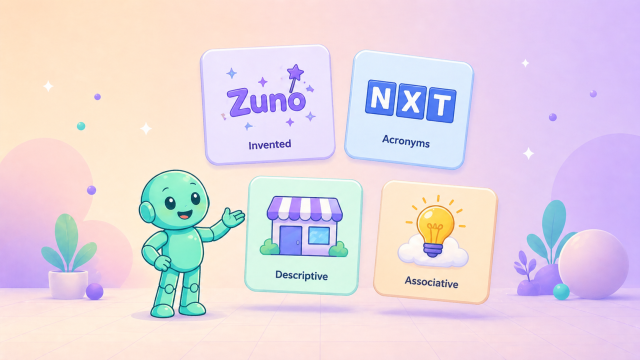
Descriptive or Fantasy Name? Choose Wisely
One of the first big decisions in business naming is this:
Descriptive name or fantasy name?
Fantasy names: Flexible and future-proof
Invented or abstract names shine when it comes to branding.
Advantages:
- Highly flexible
- Easy to build a strong brand around
- Usually work well internationally
- Less restrictive if your business evolves
That’s why many fast-growing companies choose fantasy names: they leave room to grow.
Descriptive names: Clear but limiting
Descriptive names explain what you do – instantly.
Advantages:
- Can support Google rankings
- Immediately understandable
- Keyword-friendly domains
Downside: They can feel generic, boring and often limit future expansion.
? Smart compromise: Combine a fantasy or neutral name with a descriptive strapline – or vice versa.
SEO vs. Branding: Don’t Overoptimize
Yes, keywords in domains can help SEO. But a name built only for Google often lacks personality.
Search engines change. Brands last.
A strong name:
- Works without explanation
- Sounds good
- Can be remembered after hearing it once
SEO can be optimized later. A weak name can’t.
Keep It Short (Seriously)
Short names win. Almost always.
Rules of thumb:
- No more than three words
- Ideally under 10 characters
- Preferably two syllables
Long names get abbreviated anyway – and you lose control over your brand.
Also remember: The longer the name, the less space you have on Twitter, logos, app icons and URLs.
Mind the Strapline
If your name is emotional or abstract, your strapline can explain. If your name is descriptive, your strapline can inspire.
This balance creates:
- Clarity
- Emotion
- Memorability
A Simple Naming Process That Works
Don’t jump straight to “the perfect name”. Follow a process:
- Collect ideas
- Develop variations
- Fine-tune promising names
- Check availability and risks
- Choose the best candidate
Skipping steps usually leads to regret later.
Define Your Priorities Early
Not every name can do everything.
Decide what matters most:
- Easy to remember?
- Unique?
- Meaningful?
- SEO-friendly?
- Available domains?
- International usability?
Knowing your priorities prevents endless doubt.
Your Name Is Part of Your Personality
A business name always communicates something – even if you don’t intend it.
Ask yourself:
- What associations should it evoke?
- Serious or playful?
- Innovative or traditional?
- Premium or accessible?
Your name should feel right for your company’s identity.
Use Storytelling
A good name gets better with a story.
If you can tell a short anecdote about how your name came to be, people will remember it longer. Stories create emotional hooks – and emotional hooks create brands.
Be Careful with Abbreviations
Abbreviations are hard to build emotionally.
Unless you already have massive reach, shortened names:
- Are harder to remember
- Lack personality
- Require more marketing effort
Emotional names usually outperform acronyms.
Avoid Special Characters
Special characters create friction:
- Constant spelling explanations
- Domain issues
- Email errors
Simple beats clever here.
Pronunciation Matters
Unusual pronunciation can work as an ear-catcher – but only if it’s intuitive.
If people constantly ask “How do you pronounce that?”, your name works against you.
Avoid the Me-Too Trap
Prefixes like i-, my-, you- Suffixes like -plus, -24, -online
They’re interchangeable, boring and forgettable.
The same applies to TLDs. Your domain should support your brand, not dilute it.
Think Long-Term
Changing a business name later is painful:
- Lost brand equity
- Confused customers
- SEO setbacks
Invest more time upfront. It pays off.
Test, Reflect, Decide
Before committing:
- Say the name out loud
- Use it in phone calls
- Check for hidden or awkward word parts
- Check meanings in other languages
Then let it rest for a few days.
If you still like it after that – it’s probably the right one.
Dare to Be Subjective
One last thing that’s often underestimated:
You should like your business name.
You will live with it for years. You’ll say it hundreds of times. Logic matters – but so does emotion.
Your business is your baby. Give it a name you’re proud of.