How to Create Usernames: Tips for Memorable Handles
Your username is often the first thing people see about you online. It’s your digital handshake, and it sets the tone for every single interaction you have. It's so much more than a login credential; it’s the cornerstone of your personal brand online.
Want to turn this into real name ideas? Open Naming Toolbox to generate, refine, and compare naming options while you read.
Why Your Username Is Your Digital Handshake

That initial impression can instantly signal professionalism, creativity, or a specific passion before you’ve even posted a single thing. A well-crafted username makes you recognizable and memorable. A poorly chosen one, on the other hand, can come across as unprofessional, confusing, or just plain forgettable.
The Psychology of a Memorable Name
Think about the usernames you actually remember. They usually have a certain rhythm, bring an image to mind, or just make you curious. The real trick is to stop thinking about just finding an "available" name and start focusing on crafting one that actually serves your purpose.
A strong username does a few things all at once:
- Builds Recognition: A consistent handle across platforms makes it dead simple for people to find and follow you everywhere.
- Communicates Your Niche: A name like
AstroPhysArtimmediately tells people you’re into the intersection of science and art. - Establishes Credibility: For professional use, something straightforward like
JohnSmithWritescarries a lot more weight thanGamerDude1992.
Creating the right username has become a huge part of our online identity. With the global digital population now over 5.64 billion users by 2025—holding an estimated 423 billion accounts—finding something unique is harder than ever. This is why you see so many names with numbers and special characters tacked on. The competition is real, and understanding these global trends can shed light on just how crowded the space is.
Your username is your online ambassador. It works for you 24/7, introducing you to new communities and shaping perceptions before you type a single word.
Choosing the right username is about thinking strategically. Here's a quick look at the core elements that make a username effective.
Core Elements of a Winning Username
A great username isn't just a random collection of characters; it's a strategic choice. The table below breaks down the key characteristics of a memorable and effective handle.
| Characteristic | Why It Matters | Example |
|---|---|---|
| Memorable & Easy to Spell | If people can't remember or spell it, they can't find you. Simple as that. | CreativeClara |
| Relevant to Your Purpose | The name should align with your goals, whether professional, personal, or for fun. | CodeWithKevin |
| Consistent Across Platforms | Using the same (or similar) name everywhere builds a cohesive brand identity. | @janedoecreative on all socials |
| Visually Clean | Avoid excessive numbers or special characters that can look spammy or unprofessional. | TheUrbanGardener (not urbangardener_84!) |
| Future-Proof | A name that isn't tied to a fleeting trend or life stage will serve you well long-term. | TravelsWithTom (not TomsCollegeTrips22) |
By keeping these traits in mind, you can move from just finding an "available" name to crafting one that truly represents you.
Setting the Right Foundation
Ultimately, the best way to create a username comes down to your "why." Are you building a personal brand for your career? Creating a private account for friends? Or jumping into a competitive gaming community? Each context demands a totally different approach.
A freelance designer might see their username as a branding opportunity (PixelPerfectJane), while a gamer might want to express a bit of personality or skill (ShadowStriker). Knowing your purpose from the get-go is the single most important step. It ensures you craft an identity that works for you, not against you. This guide will walk you through how to brainstorm, refine, and lock down a name you’ll be proud of for years to come.
Brainstorming Ideas That Go Beyond the Obvious
We’ve all been there: staring at a blinking cursor on the "create username" field, completely stumped. It’s tempting to just give up and let a random generator hand you something like CoolCat789, but let's build a better way—a system you can use every time to come up with names you’ll actually like.
The whole process starts with you. Grab a notebook or open a doc and just start listing things that make you, you. What are your passions, hobbies, and quirks? Jot down favorite books, movies, colors, weird concepts, or even inside jokes. The goal here isn't to find the perfect username on the first try. It’s about building a creative goldmine of words to pull from later.
Unlocking Creativity with Word Combinations
Okay, now that you have a list, the fun part begins. Start mashing words together from different categories to see what sticks. You're looking for those unexpected pairings that just sound right.
For instance, a gamer who’s into astronomy might land on NebulaNomad. A baker who loves classic literature could try something like QuillAndCrumb.
Here are a few simple formulas I've seen work time and again:
- [Adjective] + [Noun]: It's a classic for a reason. Think
SilentVoyagerorGoldenCipher. - [Concept] + [Verb]: This combo adds a feeling of action.
PixelPioneerorEchoWeaverare great examples. - [Animal] + [Profession]: This can be a really playful and memorable route.
CodingCoyoteorArchitectBadgerdefinitely stand out.
You're trying to find two words that, when put together, spark a new, interesting idea. It's a great way to build a username that tells a small story about you without oversharing. If you want to go even deeper, check out these 10 effective brainstorming techniques for more ways to get the ideas flowing.
Using Literary Devices for Impact
Ready to level up your ideas? Let's borrow a few tricks from the worlds of poetry and literature. These simple techniques can make a username sound more melodic and memorable, which is a huge advantage in a crowded forum or social feed.
A great username often has a natural rhythm. Alliteration and rhyme are simple ways to make a name stick in someone's mind, turning a simple handle into something far more catchy and brandable.
Give these approaches a shot:
- Alliteration: Using words that start with the same sound creates a really satisfying effect. Names like
WanderlustWhisperorCrimsonCodexjust roll off the tongue. - Rhyme: You have to be careful not to sound too cheesy, but a subtle rhyme can be incredibly effective.
StarlightFlightorGridGuideare both unique and easy to remember. - Portmanteau: This is where you blend two words into one new one. For example, a tech fan who loves to explore might become
Techsplorer.
These aren't just rules; they're creative tools. By treating this process less like a chore and more like a creative exercise, you're far more likely to find a name that feels genuinely you—a handle you’ll be proud to use for years.
Matching Your Username to the Platform
A username that kills it on Twitch is probably going to fall completely flat on LinkedIn. Why? Because every online space has its own culture, its own vibe, and its own unwritten rules.
Nailing your username is all about context. You aren't trying to be a different person on each platform, but you are presenting the most relevant version of yourself. A professional handle needs to build credibility, while a gaming tag can be all about personality. Getting this right is the key to making a great first impression.
Professional Networks Like LinkedIn
When it comes to your career, clarity is king. On platforms like LinkedIn, your username needs to be as close to your real name as possible. Recruiters, former colleagues, and potential clients are often searching for you by name, and you want to make it incredibly easy for them to find you.
Think of it as the nameplate on your digital office door. It should be professional and direct.
JaneDoeConsultingJohnSmithWriterKevinLee_UX
These are perfect. They're straightforward, easy to search, and instantly communicate a professional identity. This is not the place for old inside jokes or a string of random numbers.
It's interesting to look at the psychology here. Research shows that about 45% of people stick close to their real names to stay authentic online, while nearly 30% use pseudonyms for privacy. You can find more social media statistics that dive into how people build their online identities.
Creative and Portfolio Sites
On platforms like Behance, Dribbble, or your own portfolio site, you get to loosen up a bit. This is your chance to let your username hint at your creative skills or artistic flair. It’s a small but powerful piece of your brand that people see before they even click on your work.
For example, a developer might use CodeWizard on their GitHub profile. It’s fun but still relevant, signaling expertise within that specific community. But for her consulting work on LinkedIn? JaneDoeConsulting is still the stronger, more professional choice.
A name like PixelPioneer is brilliant for a graphic designer’s portfolio. On a formal business network, though, it would just feel out of place. Context is everything.
Social Media and Gaming Communities
Instagram, TikTok, Twitch—this is where your personality gets to take center stage. These platforms are far less formal, and a catchy, memorable username is your best tool for standing out and building a following. All those brainstorming techniques we talked about earlier? This is where they really shine.
Let’s look at a few examples:
- A food blogger on Instagram might be
BakingWithBri. It’s warm, friendly, and tells you exactly what to expect. - A Twitch streamer could go with
ShadowStrikerto sound skillful and a bit mysterious. - A travel creator on TikTok could use
WanderlustWhisper—a name that’s evocative and easy to remember.
The goal is to match the tone of your username to the content you create and the community you’re trying to build. A great name feels authentic, helps people connect with you, and ultimately makes your profile much easier to find and follow.
Finding an Available Name Without the Frustration
We’ve all been there. You come up with the perfect username, ride a wave of creative genius, and then… it’s taken. Everywhere. It’s a uniquely modern kind of frustration, but it's not surprising when you stop and think about the numbers. Facebook alone has over 3 billion monthly active users, and the average person is managing somewhere between 100-150 different online accounts. No wonder all the good names seem to be gone. You can get a better sense of the scale from these social media demographics on sproutsocial.com.
The good news is you don't have to resort to mashing numbers at the end of your name. A little strategy goes a long way. The most efficient first move is to use a dedicated username checker. These tools are built to scan dozens of social networks, domain registrars, and online platforms in seconds, giving you a clear picture of what’s available.
This process map shows you how to get from a basic idea to a confirmed, available username.
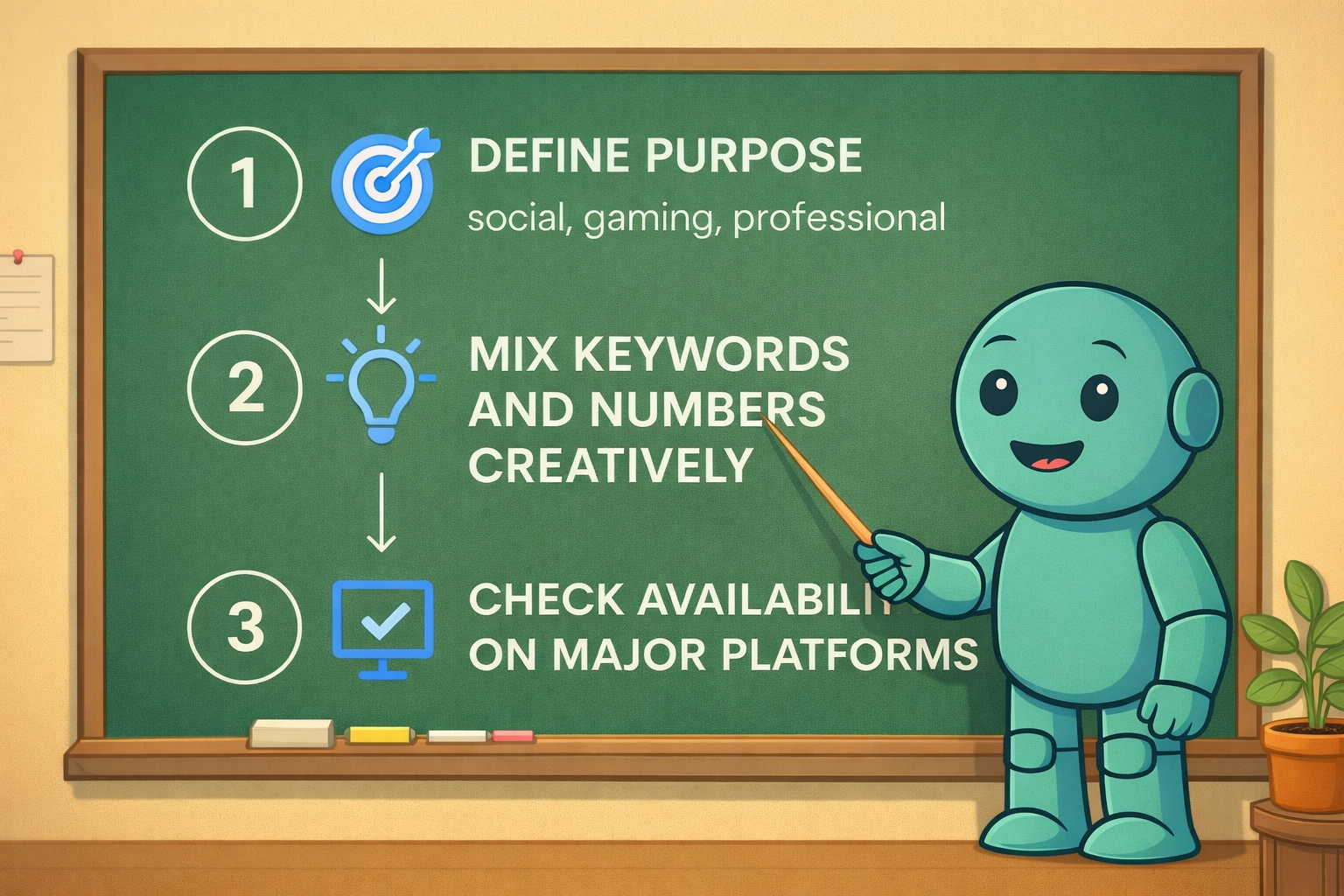
As you can see, the final, critical step is that cross-platform availability check. It's the key to building a consistent, recognizable online presence.
Using a Username Checker
I can't overstate how much time a good checker tool saves. Instead of hopping from one site to the next, you get a bird's-eye view of the entire landscape in one go. A popular choice is Namechk.
You get a simple, color-coded dashboard that instantly tells you where you can register your name.
Seeing the results laid out like this—green for available, red or gray for taken—is a game-changer. That immediate feedback lets you pivot your strategy without losing momentum. For a more detailed look at securing your brand, you can also learn how to perform a social media check with our in-depth guide.
Smart Modification Techniques
So, what happens when your top choice is taken? Don't panic. This is where you can get creative with a few small, professional-looking tweaks. The goal is to make any additions feel intentional, not like a sloppy afterthought.
Here are a few tactics I’ve used successfully:
- Add a Relevant Suffix: Think about what you do. A designer could try
JaneDoeCreativeorJaneDoeStudio. A writer might useJaneDoeWrites. It adds context. - Use Strategic Punctuation: If the platform allows it, a single underscore or period can make all the difference while keeping the name readable (e.g.,
john.smithorjohn_smith). - Incorporate a Prefix: Simple prefixes like "The" or "Real" can work well, turning
DigitalNomadintoTheDigitalNomad. It often adds a bit of authority. - Add a Location: This is perfect for a local business or a creator with a strong regional identity. Think
NYCPixelProorAustinEats.
The best modifications don't feel like a compromise. They add a layer of context or personality, making your username even more descriptive and memorable. Just steer clear of random numbers; they almost always cheapen your digital identity.
By pairing a powerful checker tool with these thoughtful modification tactics, you can turn a frustrating search into a quick and successful one. This workflow takes the guesswork out of the equation, helping you find and claim a great username you can be proud to use everywhere.
Securing Your New Digital Identity
Choosing your username is a huge first step, but the work isn't quite done. Once you've landed on the perfect handle, you need to lock it down. This isn't just about claiming the name; it’s about protecting the identity and information tied to it for the long haul.
Your username acts as a key to your digital life, which is why a security-first mindset is critical right from the start. A common mistake is including personally identifiable information (PII) that can be easily exploited. Think twice before adding your full birth year, your address, or anything that could hint at a social security number.
For instance, a username like MikeJones1984 is far less secure than something like MJWrites. The first one instantly gives away a potential birth year, a detail often used in security questions and a valuable breadcrumb for identity thieves.
Building Your Digital Footprint
With your username finalized, your first move should be to claim it everywhere—and fast. The idea is to create a consistent and unified presence across the web. This is partly about branding, but it's also a crucial defensive strategy to head off impersonators at the pass.
Grabbing your handle on all major platforms at once prevents someone else from squatting on it, which could confuse your audience or, even worse, damage your reputation.
Your online identity is an asset. Securing your username across multiple platforms is like putting a fence around your digital property. It protects your brand and prevents others from squatting on your name.
Focus on the platforms most relevant to your goals:
- Social Media: Instagram, TikTok, X (formerly Twitter), Facebook
- Professional Networks: LinkedIn, Behance, GitHub
- Creative Outlets: YouTube, Twitch, Pinterest
Even if you have no immediate plans for a particular platform, securing your name there is a smart, proactive move. It reserves your spot for the future and keeps your digital brand consistent.
The Legal Side of Your Username
For anyone building a business or a serious personal brand, there's one more layer to consider. Your username can quickly become your brand name, and that means you need to think about trademarks. A quick check now can save you from a world of legal trouble later on.
Before you get too attached to a name, it's wise to make sure you aren't stepping on an existing trademark. You can learn the basics with a straightforward guide on how to do a trademark search. This is especially important if you ever plan to monetize your online presence.
In the end, securing your digital identity is a blend of smart security habits, proactive brand management, and a bit of legal awareness. By taking these final steps, you’re not just creating a username—you’re launching a secure and cohesive online identity with confidence, ready to serve you well for years to come.
Common Questions About Creating Usernames
Even with the best strategy, you're bound to hit a few snags when trying to lock down the perfect username. Let's tackle some of the most common questions that come up so you can finalize your choice with confidence.
What Should I Do If My Desired Username Is Taken Everywhere?
It’s a frustrating moment, but definitely not a dead end. The trick is to make smart, subtle tweaks that don't dilute your brand or personality.
A great first move is to add a word that describes what you do or who you are. If you're a writer named Jane Doe, JaneDoeWrites is a fantastic alternative. If you're a designer, adding Studio or Creative works beautifully. Prefixes like TheReal can feel a bit dated unless you're a well-known public figure, so I'd use that one sparingly.
Another approach is to use punctuation if the platform allows it. A simple underscore or period, like jane.doe or jane_doe, often does the trick and keeps the name clean and readable. When you're truly stuck, a good username generator can sometimes jolt you out of a creative rut by mashing up your core ideas in a way you hadn't considered.
Is It Better to Use My Real Name or a Pseudonym?
This really boils down to what you're trying to achieve with the account. There's no one-size-fits-all answer here, just what’s right for your goals.
For professional branding, especially on a platform like LinkedIn, using your real name is non-negotiable. It builds immediate trust, makes you searchable for recruiters and potential clients, and anchors your professional identity. It’s your digital handshake.
On the other hand, if you're setting up a profile for gaming, forums, or a personal hobby account where you value privacy, a pseudonym is the way to go. It gives you more creative freedom and helps maintain a healthy boundary between your personal life and your online persona. Some people even find a happy medium with a hybrid that hints at their real name without giving it all away.
A quick pro-tip: Consistency across platforms is a huge win for building a personal brand. Even if you can't get the exact same handle everywhere, aim for recognizable variations so people can find you easily.
Should I Include Numbers in My Username?
My general advice? Tread carefully with numbers. Tacking on your birth year or a string of random digits, like JohnSmith1995, can instantly make a username look amateur, less professional, and can even be a security risk. It often signals that you settled for a backup option.
That said, numbers can work when they feel intentional and have a clear meaning.
Design247implies an always-on, dedicated service.Agent47is a very specific cultural nod that speaks directly to a niche audience.FirstStCoffeeworks because the number is part of an established brand or location.
If you absolutely have to use numbers to get an available handle, weave them in so they feel like a deliberate choice, not an afterthought. This small detail makes a huge difference in how your digital identity comes across to others online.
Ready to turn your ideas into a brilliant, available name? NameRobot has a full suite of tools, from AI-powered generators to instant trademark checks, designed to help you find the perfect handle. Start your naming journey and see what you can create.