9 Proven Names for Event Management Companies (2026 Guide)
Choosing from the endless list of potential names for event management companies is more than a creative exercise; it’s the first crucial step in building your brand’s foundation. A great name can communicate your niche, build trust, and attract your ideal clients before they even see your portfolio. It’s a strategic asset that works for you around the clock, setting the stage for every interaction and marketing effort that follows.
Want to turn this into real name ideas? Open Naming Toolbox to generate, refine, and compare naming options while you read.
This guide moves beyond simple lists, offering a strategic analysis of nine real-world examples, from global giants like Freeman to niche innovators such as Alive Coverage. We will deconstruct what makes each name work, break down the replicable strategies behind them, and provide actionable takeaways you can apply immediately. We will explore various naming conventions, including founder-driven branding, acronyms that signal scale, and evocative names that sell an experience.
Whether you’re aiming for corporate authority, creative flair, or luxury exclusivity, you’ll find the blueprint here to craft a name that not only sounds good but also drives business success. This isn’t just a collection of ideas; it’s a tactical toolkit designed to help you find a powerful, market-ready name for your venture.
1. Colin Cowie Lifestyle
Leveraging a founder’s personal brand is a powerful strategy when searching for names for event management companies, and Colin Cowie Lifestyle is a masterclass in its execution. This approach, known as eponymous branding, instantly transfers the founder’s established reputation, expertise, and industry authority directly to the business. It’s a shortcut to building trust and credibility, especially in luxury markets where personal reputation is paramount.
Strategic Analysis
The name “Colin Cowie Lifestyle” works because Colin Cowie himself is a globally recognized celebrity event planner. By using his name, the company immediately signals its association with high-profile events for clients like Oprah Winfrey and Jennifer Aniston. Adding the suffix “Lifestyle” broadens the scope beyond just event planning, suggesting a comprehensive, aspirational experience that encompasses design, travel, and luxury living. This positions the company not merely as a service provider but as a purveyor of an exclusive way of life.
Actionable Takeaways
This naming strategy is most effective when the founder has significant, pre-existing credibility. Before adopting this model, focus on building a strong personal brand through public relations, authoring books, or securing high-profile speaking engagements.
Key Insight: The success of an eponymous brand name depends entirely on the strength and perception of the founder’s personal brand. It’s a high-reward strategy that requires a significant upfront investment in personal marketing and industry leadership.
The following summary box highlights the core components of the Colin Cowie Lifestyle brand strategy.
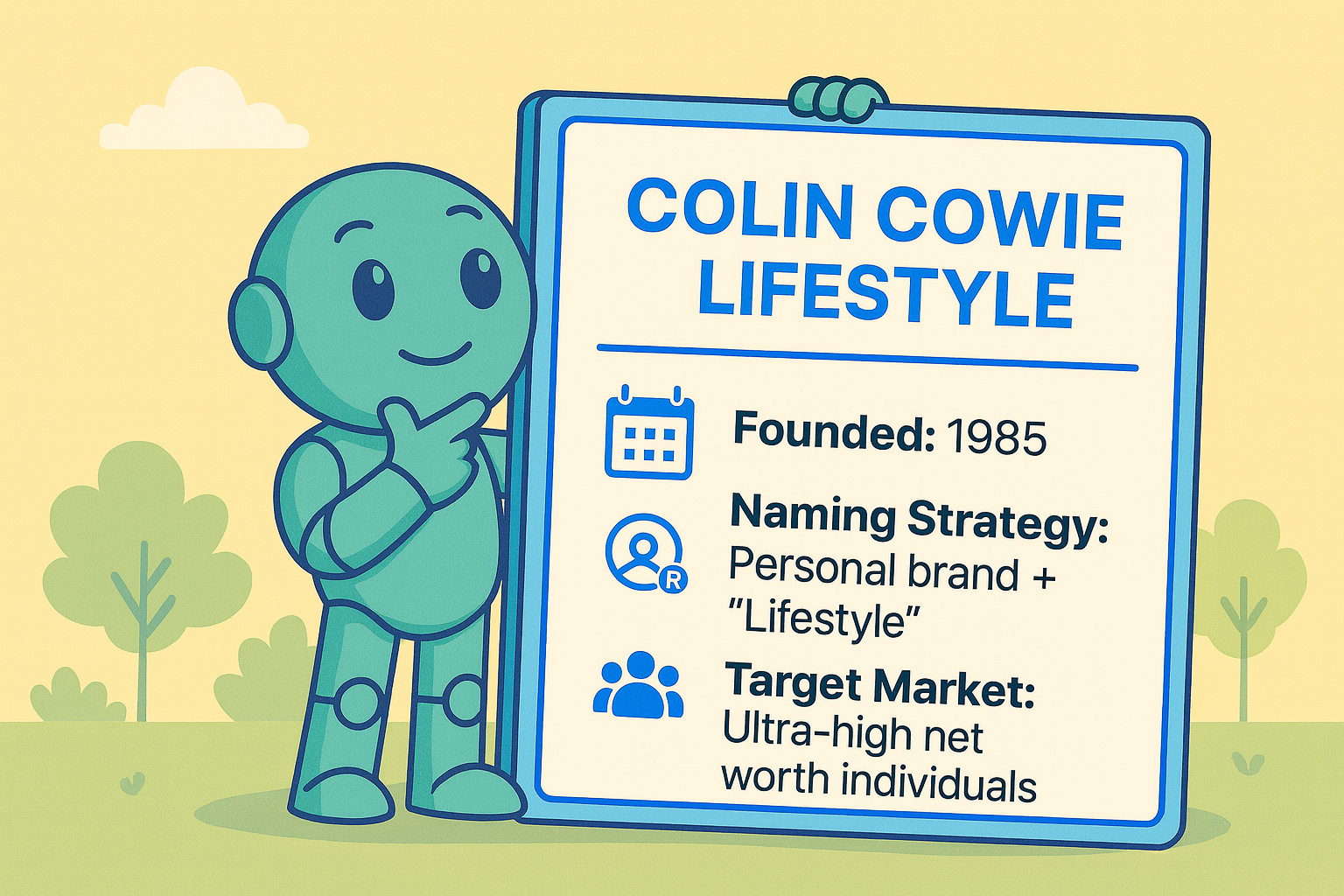
This data underscores how a long-established personal brand can be leveraged to target an exclusive, ultra-high-net-worth market with a name that promises more than an event-it promises a lifestyle.
2. MKG (Marketing and event production company)
Using a short, memorable acronym is a modern and powerful approach when selecting names for event management companies, and MKG exemplifies this strategy perfectly. This method involves distilling a longer name or concept into a punchy initialism, creating a brand identity that is sleek, professional, and easy to recall. It transforms the company name into a clean, graphic element that works seamlessly across digital platforms and marketing materials, projecting an image of efficiency and contemporary expertise.
Strategic Analysis
The name “MKG” is effective because it is short, easy to pronounce, and visually strong. Originally standing for “Mash Kabuki Group,” the company evolved to use just the acronym, shedding any potential limitations of the original name and embracing a more abstract, agency-style identity. This allows the brand to adapt and grow without being tied to specific founders or concepts. It positions MKG as a versatile creative partner for major brands like Google and Samsung, capable of executing high-concept experiential marketing events from Art Basel installations to major brand activations at SXSW. The minimalist nature of the name demands strong visual branding to give it meaning and personality.
Actionable Takeaways
This naming strategy is ideal for companies targeting corporate clients who value a modern, professional image. Before committing to an acronym, ensure it is easy to say and remember. It’s also crucial to verify that the desired domain name and social media handles are available. In the early stages, consider using a descriptive tagline to clarify your services until the brand recognition of the acronym is established. For further reading, you can explore more insights into creative agency names.
Key Insight: An acronym-based name offers flexibility and a modern aesthetic, but it requires a significant investment in branding to build meaning and recognition from scratch. It is a blank canvas that relies on strong visual identity and marketing to tell its story.
3. Bassett Events, Inc.
Employing a founder’s surname is a classic and highly effective strategy when brainstorming names for event management companies, and Bassett Events, Inc. exemplifies this traditional approach. This method combines a personal name with a direct service descriptor (“Events”) to create an identity that feels established, professional, and trustworthy from day one. It’s a straightforward path to conveying reliability and a personal commitment to quality.
Strategic Analysis
The name “Bassett Events, Inc.” works by projecting an image of stability and corporate legitimacy. Using the founder’s last name, Jennifer Bassett, anchors the brand in personal accountability. The addition of “Events” clearly communicates the company’s core function, eliminating any ambiguity for potential clients, especially in the corporate sector. Finalizing the name with “, Inc.” further enhances its professional standing, signaling a formal business structure that appeals to corporate clients, associations, and government bodies looking for dependable partners.
Actionable Takeaways
This naming convention is ideal for founders aiming to build a legacy brand focused on the corporate or high-end private event market. If your surname is common, consider adding a geographic locator or a specialty (e.g., “Smith Dallas Events” or “Jones Corporate Events”) to stand out. The key is to support the traditional name with exceptional, consistent service that builds a powerful reputation over time.
Key Insight: A traditional, surname-based name builds immediate trust and a sense of permanence. Its success hinges on the company’s ability to deliver flawless execution that reinforces the professional promise inherent in the name.
4. Pico Group
Selecting a short, globally resonant name is a strategic move for event management companies aiming for international scale, and Pico Group is a prime example of this approach. This naming convention prioritizes simplicity, memorability, and cross-cultural appeal. A name like “Pico” is easy to pronounce and recall in multiple languages, removing potential barriers to global expansion and market penetration.
Strategic Analysis
The name “Pico Group” is effective due to its concise and universal nature. “Pico” is short, punchy, and lacks specific cultural connotations, which is critical for a company operating in over 40 cities worldwide. Adding the suffix “Group” instantly communicates scale, stability, and a comprehensive suite of services, positioning the company as a major player capable of handling large-scale projects like Olympic Games exhibitions and World Expo pavilions. This combination creates a brand identity that is both accessible and authoritative.
Actionable Takeaways
For companies with global ambitions, this naming strategy is ideal. Before finalizing a short name, test its pronunciation, meaning, and connotations across your target international markets. Focus on words that are phonetically simple and visually clean. The goal is to find a name that requires minimal explanation and can easily become a recognizable global brand, much like Pico has done in the international exhibition industry.
Key Insight: A short, culturally neutral name acts as a blank canvas, allowing the brand’s reputation for quality and scale to define its meaning globally. This is a powerful strategy for any business planning multinational operations from day one.
5. Eventbrite (Technology Platform)
Combining a core service with an aspirational adjective is a highly effective strategy when brainstorming names for event management companies, and Eventbrite is a prime example of this technique. This approach, known as a compound descriptive name, merges a literal term (“Event”) with a positive, evocative word (“Brite”) to create a name that is both instantly understandable and emotionally resonant. It communicates function while promising a superior, brighter experience.
Strategic Analysis
The name “Eventbrite” succeeds because it is simple, memorable, and strategically positions the company as an innovative, user-friendly solution in the event technology space. The “Event” portion leaves no doubt about the industry, while “Brite” suggests intelligence, ease of use, and a positive outcome for both organizers and attendees. This clever combination helped the brand stand out in a crowded market by framing its technology not just as a tool, but as a way to make the entire event creation and discovery process more illuminated and successful.
Actionable Takeaways
This naming model is ideal for tech-focused companies or services that aim to simplify a complex process. Identify the single most important keyword for your service and pair it with a word that captures your unique value proposition, such as “swift,” “vivid,” or “nexus.” Ensure the resulting compound name is easy to pronounce and spell, as its strength lies in its intuitive and memorable nature.
Key Insight: A well-crafted compound name can serve as a miniature mission statement. It simultaneously explains what you do and promises the benefit of doing it with you, creating a powerful first impression that is easy to recall and share.
The following summary box highlights the core components of the Eventbrite brand strategy.
| Component | Analysis |
|---|---|
| Naming Strategy | Compound Descriptive (Service + Aspirational Adjective) |
| Target Market | Broad: From small community organizers to large-scale festival promoters |
| Core Brand Message | Simplifying and illuminating the world of live events through technology |
| Market Positioning | Accessible, innovative, and user-friendly global platform for event creation, management, and discovery |
This data shows how a simple, powerful name can support a brand’s journey from a Silicon Valley startup to a global leader in event technology, appealing to a vast and diverse user base.
6. Vok Dams (Emotion Marketing Events)
Using a distinctive or unusual founder’s surname offers another powerful angle on eponymous branding, creating a name that is both memorable and unique. Vok Dams is a prime example of this strategy, leveraging an uncommon name to build a highly recognizable global brand. This approach creates immediate curiosity and distinctiveness in a crowded market, making it one of the more creative names for event management companies.
Strategic Analysis
The name “Vok Dams” stands out due to its unique phonetic quality and German origin, making it inherently memorable. To counteract any potential ambiguity, the company pairs its name with the highly descriptive tagline, “Emotion Marketing Events.” This combination is strategically brilliant; the unique name captures attention, while the tagline immediately clarifies their specialized expertise in creating experience-driven events for major brands like BMW and Mercedes-Benz. This dual approach allows them to build a unique brand identity without sacrificing clarity of purpose.
Actionable Takeaways
If you have an unusual or phonetically interesting surname, consider using it as your company’s foundation. The key is to support it with a crystal-clear descriptor or tagline that explains what you do. Invest heavily in consistent branding and pronunciation guides across all marketing materials to build strong name recognition and turn its uniqueness into a competitive advantage.
Key Insight: A unique or uncommon founder’s name can be a powerful differentiator, but its success hinges on pairing it with a clear, descriptive tagline that immediately communicates the company’s value proposition and expertise.
The following summary box highlights the core components of the Vok Dams brand strategy.
This data demonstrates how a distinctive name, supported by a clear positioning statement, can establish a company as an international leader in a specialized niche like automotive experiential marketing.
7. Freeman (Event and Brand Experiences)
Using a strong, foundational surname as a brand name is a classic approach when seeking names for event management companies, and Freeman exemplifies this strategy’s power and longevity. This method leverages a simple, heritage-rich name to build an identity centered on stability, reliability, and authority. Unlike eponymous branding tied to a founder’s active persona, this approach transforms a family name into a corporate institution that stands on its own.
Strategic Analysis
The name “Freeman” is effective due to its simplicity, strength, and timeless quality. Originally founded as Freeman Decorating Company, the strategic shortening to just “Freeman” modernized the brand while retaining nearly a century of accumulated trust and industry recognition. This one-word name is easy to recall and conveys a sense of established American heritage and dependability. It works for a global giant because it doesn’t limit its scope; it’s a powerful, empty vessel filled with the meaning of its massive operational scale, from producing CES to managing logistics for countless major conventions.
Actionable Takeaways
This naming strategy is ideal for businesses aiming to project an image of enduring legacy and comprehensive capability. If using a common surname, invest heavily in brand differentiation through a distinct visual identity and a clear value proposition. It’s also critical to build an extensive service portfolio to ensure the name becomes synonymous with industry leadership and authority. This approach is explored further in various guides on naming a marketing agency.
Key Insight: A surname-based brand like Freeman succeeds by transforming a personal name into a symbol of institutional trust and reliability. Its strength lies not in the founder’s celebrity but in the company’s consistent, large-scale operational excellence over decades.
8. WeddingWire (Niche Platform)
Focusing on a specific market vertical is a highly effective strategy when brainstorming names for event management companies, and WeddingWire perfectly illustrates this niche-naming approach. The name is a direct compound of its two core components: its specific event category (“Wedding”) and its function as a digital connector (“Wire”). This method provides immediate clarity, instantly communicating the company’s purpose to its target audience of engaged couples and wedding vendors.
Strategic Analysis
The name “WeddingWire” succeeds through its powerful simplicity and descriptive accuracy. It leaves no room for ambiguity, which is crucial in a crowded digital marketplace where user attention is fleeting. By combining the niche with a metaphor for connection (“Wire”), the brand effectively positions itself as the central hub for all wedding-related services, from finding vendors to accessing planning tools. This hyper-focused identity has allowed it to dominate SEO for wedding-related keywords and build a trusted brand known for its comprehensive vendor directory and planning resources.
Actionable Takeaways
This naming strategy works best for companies targeting a well-defined and profitable event vertical, such as corporate retreats, music festivals, or in this case, weddings. Before committing to a niche name, ensure the market is large enough to support your business goals but specific enough to allow you to become a dominant player. The name should clearly state your value proposition.
Key Insight: A niche-specific name is a powerful marketing tool. It acts as a filter, attracting your ideal customers while signaling to others that your services are specialized, which can command a premium and build targeted authority.
9. Alive Coverage (Action-Oriented Creative)
Using an action-oriented, creative name is a compelling strategy for event management companies that want to convey energy and dynamism. Alive Coverage exemplifies this approach, combining an evocative word, “Alive,” with a functional descriptor, “Coverage.” This blend immediately communicates a brand personality that is vibrant, engaging, and comprehensive, setting it apart from more traditional or corporate-sounding competitors.
Strategic Analysis
The name “Alive Coverage” is effective because it speaks directly to the core of experiential marketing: creating live, memorable moments. “Alive” suggests energy, authenticity, and real-time engagement, which are crucial for music festivals, brand activations, and product launches. “Coverage” reassures clients that every detail will be managed and documented, from production to content creation. This duality appeals to brands seeking both innovative execution and reliable, full-service support, positioning the company as a partner that brings concepts to life and captures their impact.
Actionable Takeaways
This naming model is ideal for companies targeting creative, youth-oriented, or innovative markets. To replicate this, brainstorm powerful verbs or adjectives that capture the feeling you want your events to evoke. Pair these with a word that describes your service’s scope or function. Ensure your visual branding and brand voice consistently reinforce the energy promised by the name.
Key Insight: A dynamic, action-oriented name sets a high expectation for the event experience. The success of this strategy hinges on consistently delivering events that feel as energetic and vibrant as the name itself.
This naming convention is particularly powerful for companies specializing in high-energy brand activations and experiential marketing, where the name itself becomes a promise of an unforgettable event.
Event Management Companies Comparison Table
| Company | Implementation Complexity ? | Resource Requirements ⚡ | Expected Outcomes ? | Ideal Use Cases ? | Key Advantages ⭐ |
|---|---|---|---|---|---|
| Colin Cowie Lifestyle | High - Founder-driven, personalized | High - Elite networks & reputation | Luxury, high-end event planning with strong personal brand credibility | Ultra-high net worth clients, celebrity & luxury events | Instant credibility, strong brand recognition, media-friendly |
| MKG (Marketing & Event Prod.) | Moderate - Acronym branding & marketing | Moderate - Visual branding & marketing | Modern, flexible agency identity with broad appeal | Fortune 500, luxury brands, tech companies | Short, memorable, modern, flexible, international appeal |
| Bassett Events, Inc. | Low - Traditional naming, straightforward | Low to moderate - Corporate structure | Professional, trustworthy event management | Corporate, associations, government, B2B events | Clear service indication, trustworthy, strong SEO potential |
| Pico Group | Moderate - Global brand positioning | High - Marketing for global presence | Scalable, professional, multinational event marketing | Multinational corporations, international exhibitions | Cross-cultural, scalable, memorable, professional |
| Eventbrite | Moderate - Tech platform branding | High - Platform development & marketing | Innovative, user-friendly event tech solution | Event organizers of all sizes | Memorable, descriptive, innovative, strong brand recognition |
| Vok Dams | Moderate - Unique name with tagline | Moderate - Marketing & pronunciation | Distinctive, experience-driven event marketing | Automotive brands, luxury corporations, B2B events | Unique, memorable, trademark-friendly, brand differentiation |
| Freeman | Low to moderate - Simple surname | High - Large-scale operations | Stable, reliable, large corporate event services | Large corporations, trade shows, convention centers | Simple, professional, flexible, established, broad recognition |
| WeddingWire | Low - Niche-specific descriptive name | Moderate - Platform & SEO marketing | Clear niche platform for wedding planning | Engaged couples, wedding vendors | Highly descriptive, strong SEO, clear target, memorable |
| Alive Coverage | Moderate - Creative brand personality | Moderate - Consistent branding | Energetic, innovative event production for creative markets | Consumer brands, lifestyle, entertainment, festivals | Evocative, memorable, authentic, dynamic |
Key Takeaways: Crafting Your Winning Event Company Name
The journey through the world of successful event company names, from the personal brand authority of Colin Cowie Lifestyle to the modern, tech-forward feel of Eventbrite, reveals a foundational truth: the most powerful names are built on strategy, not just creative impulse. We’ve dissected names that leverage founder identity, communicate a specific service niche, or evoke a feeling of grand-scale production. The common thread is a deliberate connection between the name and the brand’s core mission and target audience.
Your company name is more than a label; it is your first point of contact, a promise of value, and a critical piece of your marketing engine. It sets the stage for every client interaction and every event you produce. A name like Pico Group, built from an acronym for “Production Innovation Company,” immediately signals a focus on large-scale, innovative experiences, while a name like WeddingWire leaves no doubt about its specialized market. This level of clarity is not accidental; it’s the result of a rigorous strategic process.
Strategic Checklist for Your Final Decision
Before you commit to a name, put it through a final strategic filter. The right name for an event management company will successfully navigate these critical checkpoints, ensuring it functions as a long-term asset rather than a short-term solution.
- Market Alignment: Does the name resonate with your ideal client? A name designed for high-end luxury weddings (e.g., Bassett Events, Inc.) will have a different tone and structure than one targeting corporate tech conferences.
- Brand Personality: What feeling does the name evoke? Does it sound sophisticated, energetic, reliable, or creative? Ensure this personality aligns with the experience you promise to deliver.
- Memorability and Practicality: Is the name easy to remember, spell, and pronounce? A name that is confusing or easily misspelled can create friction for potential clients trying to find you online or refer you to others.
- Digital Availability: Is the domain name and are the key social media handles available? Securing your digital real estate is a non-negotiable step in today’s market. A brilliant name is useless if the corresponding .com is already taken.
From Inspiration to Action
The examples analyzed throughout this article provide a blueprint. They show us that some of the best names for event management companies are born from a deep understanding of their unique value proposition. Whether you choose a personal brand, a descriptive name, or an abstract concept, the goal remains the same: to create a name that is both distinctive and meaningful.
This process requires a blend of creative exploration and analytical validation. Mastering this balance is what transforms a simple business idea into a resonant and enduring brand. The name you select today will become the foundation of your legacy, a symbol of the unforgettable experiences you create. Choose with intention, strategy, and a clear vision for the future you want to build.
Feeling stuck between creative ideas and strategic validation? NameRobot offers a suite of AI-powered tools designed to help you generate unique names, check domain availability, and even perform trademark checks. Move from brainstorming to a brand-ready name with confidence by visiting NameRobot today.