How to Rebrand a Company: Expert Strategies for Success
Rebranding is a huge undertaking. It's far more than a fresh coat of paint or a new logo. It's a fundamental shift in how your company presents itself to the world, driven by a need to better align your image with your business goals, market position, or core values. A successful rebrand involves a deep brand audit, the development of a new identity and strategy, and a well-planned launch that gets everyone, from your internal team to your customers, on board.
Planning a rebrand with a new name? Use Naming Toolbox to generate, structure, and check serious name ideas before the launch plan gets expensive.
Knowing When and Why to Rebrand Your Business

Before you even think about new colors or taglines, the first and most important question is why. A rebrand without a rock-solid, strategic purpose is like setting sail without a map. It's an expensive, confusing journey that's unlikely to land you anywhere worthwhile. The decision to rebrand must be a direct answer to a real business challenge or a clear opportunity on the horizon.
Ultimately, the process is about reconnecting your company's identity with the realities of the market, the expectations of your customers, and your own evolving mission. This can touch everything from your name and logo to your messaging and brand architecture. The best practice is to kick things off with a thorough brand audit, as recommended by brand management experts at Bynder.com, to see where you stand before you start building something new.
Identifying the Core Drivers for Change
So, what are the real triggers for such a massive project? From my experience, they almost always boil down to a handful of key scenarios where your brand no longer matches your business reality.
Your brand might be overdue for a change if any of these situations sound familiar:
- Your offerings have outgrown your image. Maybe you started selling one specific product but now offer a full suite of services. Think about how Dunkin' Donuts dropped the "Donuts" to become just Dunkin'. Their menu had grown so much that the original name felt limiting.
- Your market position needs a major shift. The competitive field is always changing. If new players have shaken things up or your once-unique selling point is now standard, a rebrand can help you carve out a new, more powerful space for yourself.
- You're trying to reach a new audience. The brand that resonated with established enterprise clients might fall completely flat with a younger, direct-to-consumer demographic. Rebranding lets you start speaking their language.
- A merger or acquisition just happened. When two companies merge, creating a single, unified brand is non-negotiable. It clears up customer confusion, builds a shared internal culture, and signals a new beginning.
Key Takeaway: A rebrand should never happen just because someone is "tired of the old logo." It must be a strategic solution to a tangible business problem or a forward-thinking move to capture a new opportunity.
Setting Clear Strategic Goals
Once you've pinpointed your primary driver, the next step is to translate that "why" into measurable business goals. A rebrand isn't just an aesthetic exercise; it's a strategic investment that should deliver a tangible return. By tying your efforts to specific outcomes, you create a benchmark for success and ensure the entire project stays focused on what truly matters.
Here's a look at how different rebranding drivers can be connected to clear, strategic objectives.
Rebranding Drivers and Strategic Goals
| Rebranding Driver | Example Scenario | Primary Strategic Goal |
|---|---|---|
| Market Repositioning | A B2B software company shifts from a "budget-friendly" option to a "premium, high-value" solution. | Increase average contract value (ACV) by 25% within 18 months. |
| Merger & Acquisition | Two regional marketing agencies merge to form a national powerhouse. | Achieve 90% brand awareness in three new major metropolitan markets within the first year. |
| Outdated Brand Image | A 50-year-old manufacturing firm needs to attract younger engineering talent. | Increase the volume of qualified job applicants from top-tier universities by 40%. |
| New Audience Target | An organic snack brand popular with parents wants to appeal to college students. | Capture 15% market share in the 18-24 age demographic within two years. |
| Negative Reputation | A company is recovering from a major data breach or PR crisis. | Improve public sentiment score (e.g., Net Promoter Score) by 30 points post-launch. |
Defining these goals upfront provides a north star for every decision you'll make, from the name you choose to the channels you use for your launch. It turns a subjective process into an objective-driven mission.
Conducting an Unbiased Brand Audit
With your goals set, it's time for an honest look in the mirror. A comprehensive brand audit isn't just an internal brainstorming session; it's a deep dive into how your brand is actually perceived by the people who count: your customers, your employees, and the market.
The mission here is to gather unfiltered feedback to get a true snapshot of your brand's current health. Start by digging for answers to some tough questions.
- Customer Perception: How do your customers really see you? Use surveys, one-on-one interviews, and social listening to find out. What words do they use to describe you? Do they truly understand your value?
- Internal Alignment: Talk to your team, from the C-suite to the front lines. Does everyone believe in the mission? Can they clearly and consistently explain what the company does and why it matters?
- Competitive Analysis: Size up the competition. How does your brand look, sound, and feel compared to theirs? Where are the gaps in the market that your new brand could own?
This audit will clearly show you what's working and what's not. It gives you the hard data and qualitative insights needed to guide your entire rebranding journey, ensuring your new identity is built on a foundation of reality, not just wishful thinking.
Developing Your New Brand Identity
With a solid strategy built from your audit and clear goals in hand, it's time to get creative. This is where your new brand starts to feel real, moving from abstract ideas to the tangible elements that will define your company's personality. And the journey almost always begins with one of the biggest decisions you'll make: the name.
A name change isn't a given in every rebrand. But if your audit showed that your current name is holding you back, is confusing, or is tied to an identity you're moving away from, this is the moment to explore a new one. The right name can open doors instantly; the wrong one can put up a wall before you even start.
The Naming Conundrum: Choosing Your New Moniker
Finding a new company name is a careful mix of art and science. It has to be memorable and easy to say, of course, but it also needs to connect emotionally. More importantly, it has to perfectly align with your new brand positioning and be legally available. This isn't just a fun brainstorming session. It's a strategic exercise that can make or break your entire rebrand.
The process boils down to generating a ton of ideas and then running them through a gauntlet of practical checks.
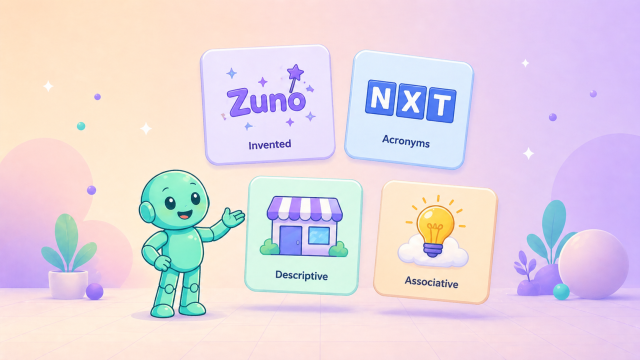
- Brainstorming Broadly: Start by exploring different types of names. Are you looking for something descriptive (like The Container Store), evocative (like Nike), or totally invented (like Hulu)? Get your key stakeholders in a room and cast a wide net.
- Checking for Availability: This is a non-negotiable step. A brilliant name is useless if the domain is taken or it's already trademarked. You need to run thorough domain and preliminary trademark searches early on.
- Testing for Resonance: Once you have a shortlist, get it in front of a small group from your target audience. How does it make them feel? Can they remember it and spell it easily? You can also use NameScore to compare and evaluate serious shortlist candidates before the final decision. That feedback is gold.
This is where Naming Toolbox can be a massive help, guiding you from a blank page to a vetted shortlist far more efficiently than guesswork alone.
Crafting a Compelling Messaging Framework
With a name chosen, you have to decide what it's going to say. A powerful messaging framework is what ensures everyone in your company tells the same, compelling story. This isn't about writing one tagline; it's about building the entire verbal foundation for your brand.
This framework is the playbook for all your future communications, from the copy on your website to the way your sales team talks about your products.
A brand's voice is its unique personality. Its tone is the mood or attitude it adopts in specific situations. A consistent voice builds trust, while a flexible tone allows you to connect with genuine empathy.
Think of it this way: your voice is who you are (e.g., expert, witty, encouraging), while your tone is how you express that personality in a given moment (e.g., professional in a whitepaper, supportive on social media).
Defining Your Brand Voice and Tone
Your brand voice should be a direct reflection of your company's personality and core values. Are you an authoritative professional or a playful and informal partner? Writing this down is crucial for keeping everyone on the same page.
A great way to start is by brainstorming a list of adjectives that describe your new brand, then forcing yourself to narrow it down to the three or four that matter most. For each one, create a simple "do and don't" list for clarity.
| Brand Voice Characteristic | What It Is (Do) | What It Isn't (Don't) |
|---|---|---|
| Confident | Use direct, clear, and knowledgeable language. Make assured recommendations. | Be arrogant, dismissive, or hide behind overly technical jargon. |
| Empathetic | Focus on the customer with "you" and "your." Acknowledge their challenges. | Sound pitying, generic, or emotionally detached. |
| Inspiring | Focus on possibilities and positive outcomes. Use motivational language. | Be unrealistic, hyperbolic, or overly optimistic without substance. |
This simple chart becomes an invaluable guide for anyone creating content for your brand. For a more in-depth guide, our post on creating a brand identity walks through more detailed steps.
Establishing Core Messaging Pillars
Beyond voice and tone, you need to establish your core messaging pillars. These are the 3-5 key themes or value propositions that your brand will own. Think of them as the foundational talking points you want to be known for.
From your customer's perspective, these pillars should immediately answer a few key questions:
- What problem do you solve for me? (Get to the pain point.)
- How do you solve it uniquely? (Show your differentiator.)
- Why should I trust you? (Build credibility and offer proof.)
For a software company, these pillars might be something like "Unmatched Security," "Effortless Integration," and "24/7 Expert Support." Every single piece of content, from a blog post to a press release, should then tie back to one or more of these pillars. This repetition is what builds a consistent and powerful brand story in the minds of your audience.
Building Your Visual and Verbal Toolkit
This is where the rubber meets the road. You've got a brilliant strategy and a sharp new name, but without the right tools, that rebrand will stay stuck on a whiteboard. Now, we shift from abstract ideas to concrete execution, building a system that allows your entire team to bring the new brand to life consistently.
Get this part wrong, and even the most inspired rebrand will unravel fast.
The foundation of it all is a comprehensive brand style guide. Think of this as the bible for your new identity: the single source of truth for your look, feel, and voice. Its job is to stamp out guesswork and empower everyone, from the new marketing hire to the CEO, to represent the company cohesively. A solid guide is your best defense against brand dilution.
Codifying Your Visual Identity
Your visual identity is what people see first, so the rules here have to be airtight. The goal isn't to handcuff creativity but to build a strong, recognizable foundation for it. This isn't just a "nice-to-have"; a clear visual guide is absolutely essential when you're learning how to rebrand a company effectively.
Your guide needs to nail down every visual detail.
- Logo Usage Rules: Be specific. Show exactly how the logo can and cannot be used. Define minimum sizes, the clear space required around it, and which versions to use on different backgrounds (full color, one color, reversed out). I always recommend including a "chamber of horrors" section showing what not to do, like stretching, recoloring, or distorting it.
- Color Palette: Don't just show the colors; define them precisely. You need the exact codes for every format: HEX for web, RGB for digital screens, and CMYK for anything printed. Designate your primary brand colors and then a secondary palette for accents and other materials.
- Typography Hierarchy: Get granular with your fonts. Specify which fonts, weights, and sizes to use for headings (H1, H2, H3), body copy, and captions. Outlining these details ensures a slide deck has the same visual DNA as your website.
A consistent visual brand presentation can increase revenue by 33%. This statistic is a powerful reminder that codifying your visual identity isn't just about aesthetics. It directly impacts your bottom line.
Defining Your Brand Voice in Action
Just as you've done for your visuals, you need to define how your brand sounds. This part of the style guide is all about translating your messaging and voice attributes into practical, day-to-day writing guidelines. It's how you make sure the brand sounds like itself, whether it's a tweet from the social media manager or an email from the sales team.
This isn't about creating robotic scripts. It's about building a framework that guides people toward authentic, on-brand communication. Simple do's and don'ts work wonders here.
Example Voice & Tone Guidelines:
| Guideline | Example "Do" | Example "Don't" |
|---|---|---|
| Language Simplicity | "Our platform helps you find new customers." | "Our platform assists in the acquisition of new clientele." |
| Active vs. Passive Voice | "Our team developed a new solution." | "A new solution was developed by our team." |
| Grammar & Punctuation | "We always use the Oxford comma." | "We sometimes use the Oxford comma." |
| Industry Jargon | "We use AI to help you work faster." | "We leverage AI to optimize your workflow synergy." |
Applying the Toolkit to Key Assets
With a robust style guide in hand, you're ready to roll. The final step in this phase is applying your new identity to your most critical brand assets. This is the moment your rebrand finally becomes real to the outside world. Start with the materials that get the most eyeballs, both internally and externally.
Here's a practical checklist to get you started:
- Website Redesign: Your website is your digital flagship. It needs to be the first and most polished expression of your new brand, from the homepage down to the privacy policy.
- Social Media Profiles: This is a quick win. Update all profile pictures, banners, and bios across every channel at the same time for a clean, unified launch.
- Sales & Marketing Collateral: Your sales team needs to be armed with the new brand from day one. That means updated pitch decks, brochures, case studies, and email signatures.
- Internal Templates: Don't forget your own team. Update internal documents, presentation slides, and email templates so everyone starts living and breathing the new brand immediately.
Planning a Seamless Rebrand Launch
How you roll out your rebrand is just as crucial as the strategy that got you there. A great launch isn't just about flipping a switch; it's a meticulously planned campaign. From my experience, the most successful rebrands always start from the inside out. You have to turn your own people into your biggest fans before a single customer ever sees the new logo.
This internal-first approach is all about building momentum. When your team can clearly and confidently explain the new vision, you've set the stage for a powerful external launch that truly makes an impact.
Launching Internally First
Let's be honest: your employees are your most important audience. If they don't get it or, worse, don't believe in the rebrand, how can you possibly expect your customers to? A botched internal rollout leads to confusion, apathy, and sometimes even pushback, undermining the whole effort before it even sees the light of day.
The real goal here is to get your team genuinely excited about what's happening. This means pulling back the curtain and sharing the why behind the change: the strategic thinking, the customer research, and the future you're all building together.
Here's how to build that internal buzz:
- Host an Executive Town Hall: Kick things off with an all-hands meeting led by the CEO. This shows everyone that this isn't just a marketing project; it's a core business initiative backed by leadership.
- Run Department-Specific Training: After the big reveal, break out into smaller, more focused sessions. Your sales team needs to know how to pitch the new brand, while customer service needs the right talking points for the inevitable questions.
- Create a "Brand-in-a-Box": Give your team everything they need to start living the new brand immediately. Think updated email signatures, fresh presentation templates, and a link to the new digital style guide.
A well-informed, enthusiastic team is your single greatest asset during a rebrand launch. When your own people become genuine brand ambassadors, their advocacy is far more powerful than any press release you could ever write.
Getting everyone on board is non-negotiable, especially if a name change is involved. You have to make sure the entire team understands the rationale. For some great pointers on this, check out our guide on how to lead a name discussion to make that process go a lot smoother.
A successful launch follows a clear, structured progression. It's a process, not a single event.
Orchestrating the External Rollout
Once your team is fired up and ready to go, it's time to introduce your new brand to the world. A public launch demands flawless coordination across every single customer touchpoint. Consistency is everything. A disjointed launch, where a customer sees the old logo on your website but the new one on Instagram, just creates confusion and chips away at their trust.
Think of it as one big, coordinated "reveal" moment.
And the stakes are high. A recent study found that 74% of companies in the S&P 100 rebranded within their first seven years. These are massive projects, often taking 12 to 18 months and eating up 5% to 10% of a company's yearly marketing budget. Yet despite that investment, about 40% of rebrands fail to deliver a positive ROI, with some even causing sales to drop by up to 20%. This just underscores how critical a well-executed launch truly is.
Internal vs. External Rebrand Launch Checklist
To keep things straight, it helps to map out the distinct needs of your internal and external audiences. The internal launch is about education and excitement, while the external launch is about impact and consistency. This table breaks down the key action items for both.
| Action Item | Internal Launch Focus | External Launch Focus |
|---|---|---|
| Launch Timing | Weeks/days before the public launch | Coordinated "go-live" date and time |
| Key Messaging | The "why" behind the rebrand, strategic goals | The "what's new" for customers, key benefits |
| Primary Channels | All-hands meetings, internal newsletters, Slack | Website, social media, press release, email |
| Essential Assets | Brand guidelines, new templates, talking points | Updated website, new ad creative, social profiles |
| Success Metric | Employee understanding and positive sentiment | Brand awareness, website traffic, media mentions |
By tackling each of these areas with a specific focus, you ensure a smooth transition from your internal team to the outside world.
Your Cross-Channel Launch Checklist
To guarantee a unified front on launch day, you need a master checklist of every single asset that needs an update. This list has to be exhaustive, covering everything from your digital presence to physical materials. The goal is to flip the switch on everything at the exact same moment.
Digital Touchpoints
- Website: This is your number one priority. The entire site, from the homepage hero image all the way down to the tiny favicon in the browser tab, must reflect the new brand the second you go live.
- Social Media Profiles: Update all profile pictures, cover photos, bios, and handles (if they're changing) across every platform simultaneously.
- Email Marketing: All email templates, from your weekly newsletter to your transactional order confirmations, need to be updated with the new branding.
- Digital Advertising: Every active paid search, social media, and display ad must be switched over to the new creative. Don't leave old ads running.
Physical and Operational Touchpoints
- Product Packaging: If you sell physical products, this requires some careful inventory planning to phase out old packaging and roll in the new.
- Sales Collateral: Make sure your sales team is armed with updated brochures, one-pagers, and new business cards before the launch.
- In-Store Signage: For any brick-and-mortar business, all physical signage, from the front door to in-aisle displays, needs to be replaced.
- Company Communications: This covers everything from the official press release announcing the rebrand to the updated template for customer invoices.
By methodically planning both your internal and external rollout, you can execute a rebrand that feels confident, professional, and seamless, setting your new brand up for success right from day one.
Measuring Post-Launch Success and Momentum
So, you've launched the new brand. It's easy to feel like you've crossed the finish line, but in reality, you've just started a whole new race. The heavy lifting now shifts from creation to ongoing management. This is where we see if the rebrand is actually hitting the strategic goals we set out to achieve from day one.
Remember that pre-rebrand audit? It's not just a snapshot of the past; it's your starting block. By comparing what's happening now against those initial benchmarks, you can clearly measure the return on your investment and prove the value of this entire undertaking. We're not talking about vanity metrics here. This is about understanding the real-world impact of your new identity.
Defining Your Key Performance Indicators
To get a true read on success, you need a healthy mix of hard data and real human feedback. This balanced view gives you the complete picture of how your rebrand is landing and whether it's moving the needle on your business goals.
The metrics you track should connect directly to your original objectives.
- Brand Awareness and Recall: Are more of the right people aware of you now? Keep an eye on direct website traffic, the volume of branded search queries, and the chatter on social media mentions. A solid lift in these areas is a fantastic early sign.
- Website Performance: A great rebrand should make your digital storefront more effective. You'll want to monitor things like bounce rate, time on page, and, of course, conversion rates. If the new messaging is doing its job, these numbers should be heading in the right direction.
- Lead Quality and Sales: Don't just count leads. Look at their quality. Are you attracting the customer you actually want? Dig into your lead-to-customer conversion rate and average deal size. This will tell you if your new positioning is resonating with a higher-value audience.
- Social Media Sentiment: What's the vibe out there? Use social listening tools to get a feel for the tone of the conversation. A noticeable shift from neutral or negative to positive is a powerful signal that your new identity is connecting with people.
Key Insight: Success isn't a single number. A truly successful rebrand builds momentum across a whole range of indicators, from top-of-funnel awareness right down to the bottom line.
Gathering Continuous Feedback
Data can tell you what is happening, but it rarely tells you why. That's where direct feedback comes in. Never assume you know how your audience feels. You have to actively listen to both your customers and your own team to catch any friction or confusion early on.
This feedback loop is what allows you to fine-tune your strategy after the launch. A great naming strategy, for instance, should lead to people saying the new name is clear and easy to remember. If you want to go deeper on this, we have a whole guide on how to choose a brand name that drives recognition and sales.
Here are a few practical ways to keep the lines of communication open:
- Customer Surveys: Send out short, simple surveys through email or on your website. Just ask people what they think of the new look and messaging.
- Employee Check-Ins: Your team is on the front lines every day. Set up regular chats with your sales and customer support staff to find out what they're hearing from customers. Their insights are pure gold.
- Social Listening: Don't just track mentions; look for questions and genuine feedback. A timely response shows you're paying attention and you care.
By committing to this cycle of measuring, listening, and adjusting, you ensure your rebrand evolves from a one-off project into a living, breathing strategy. This is how you solidify your new position in the market and turn a significant investment into sustainable, long-term growth.
Common Rebranding Questions Answered
Even with the best-laid plans, rebranding is a journey filled with tough questions and completely valid concerns. Knowing how to handle these moments is what separates a smooth transition from a chaotic one, keeping everyone from your investors to your team feeling confident. Let's get into a few of the most common questions that pop up.
One of the first things out of any leader's mouth is, "What's this going to cost?" The honest answer? It depends. There's no universal price tag. A rebranding budget can swing wildly from a few thousand dollars for a startup just tweaking its logo to millions for a multinational corporation redoing everything from the ground up.
The scope of your project dictates the cost. A simple visual refresh is one thing, but a complete name change that requires new packaging, updated signage across hundreds of locations, and a global marketing blitz is a whole different animal.
What Is the Biggest Mistake to Avoid?
If there's one fatal flaw I've seen time and again, it's treating a rebrand as a purely cosmetic exercise. This is, by far, the biggest mistake you can make.
A successful rebrand isn't just about a CEO getting bored with the old color scheme. It absolutely must be a strategic answer to a real business challenge. Maybe you're trying to capture a new market, shake off an outdated reputation, or simply stand out in a crowded field.
If you don't have a solid "why" grounded in business objectives, you're just throwing money at a new look that will likely confuse your customers, disengage your employees, and fail to produce any meaningful return. Your strategy has to come first, long before you ever start talking about fonts and colors.
A rebrand that doesn't solve a core business problem is just an expensive new logo. Ensure every decision, from the name to the launch plan, is directly tied to the strategic goals you established during your initial audit.
How Do You Handle Negative Customer Feedback?
Let's be real: when you change something familiar, some people won't like it. Hearing negative feedback, especially from your most loyal customers, can sting. The key is to listen without getting defensive.
Not everyone is going to fall in love with the new brand overnight, and that's perfectly normal. People form real emotional attachments to brands, so a sudden change can feel jarring.
Here's a practical way to manage the pushback:
- Acknowledge Their Feelings: Start by showing you hear them. Something as simple as, "We hear you, and we get that this is a big change," can make a world of difference.
- Explain the 'Why': Briefly share the strategic thinking behind the move. Don't just talk about your business goals; frame it in terms of how it will ultimately benefit them, like better products or a more seamless experience.
- Show, Don't Just Tell: In the long run, the new brand has to speak for itself. Consistently delivering on your new promise is the most powerful way to win over even the biggest skeptics.
Ready to find the perfect new name for your rebrand? Use Naming Toolbox to move from first ideas to practical checks for domains, trademarks, and shortlist decisions. Start your naming journey with Naming Toolbox.