
Germany: A Naming Powerhouse
Germany is known worldwide for engineering, precision and reliable products. From cars and machinery to pharmaceuticals, tools, household goods and food, German companies have built a reputation for quality that reaches far beyond their home market.
But strong products need strong names. And Germany has produced far more than excellent machines and consumer goods. It has also created some of the world’s most recognizable brand names.
For German companies, naming for international markets usually follows one of two paths: either the name deliberately communicates German qualities such as reliability, precision and technical expertise, or it becomes internationally neutral, easy to pronounce and flexible enough to work across languages and cultures.
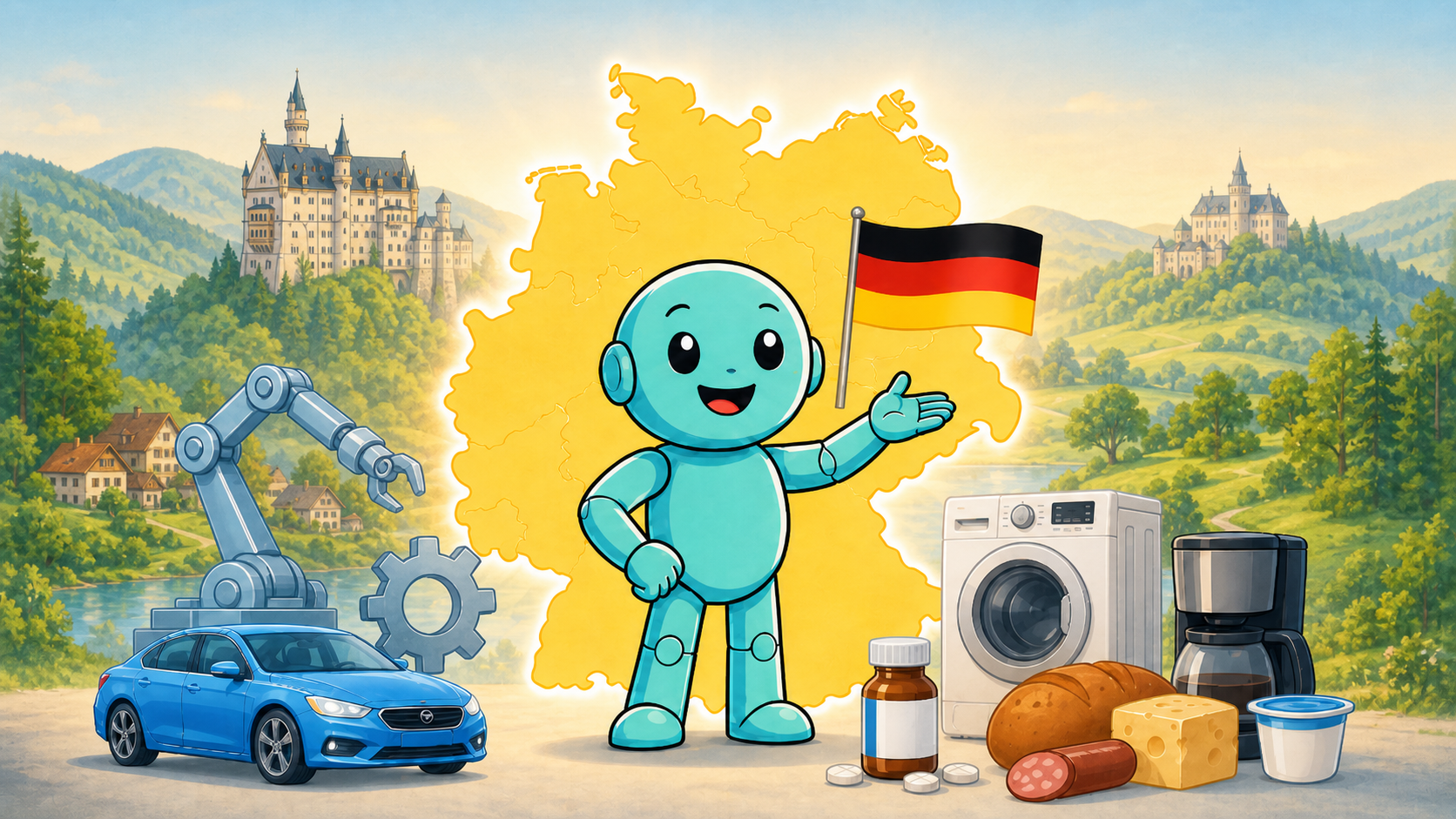
International names with German roots
Many German brand names are designed to travel well. Some are short, simple and easy to pronounce. Others are clever combinations of names, places or product descriptions.
A classic example is ALDI, derived from “Albrecht Diskont”. HARIBO combines the name of its founder, Hans Riegel, with the city of Bonn. Milka blends “Milch” and “Kakao”, creating a soft, memorable name that works far beyond the German-speaking market.
This type of name has several advantages. It feels compact, distinctive and brandable. It does not depend too heavily on one language. And it can become familiar in many markets without sounding too foreign, too technical or too difficult to pronounce.
That is one of the reasons why many German brands have succeeded internationally: their names are not only attached to strong products, they are also built to be remembered.
When German identity becomes an advantage
In other industries, a clearly German name can be a strength. Especially in sectors such as engineering, industrial technology, automotive, tools and machinery, German origin often carries positive associations.
Names such as Bosch, Siemens, Kärcher, Miele or Liebherr are not necessarily neutral or globally generic. They sound German, and in many markets, that is part of their value.
For international customers, a German-sounding name can suggest quality, durability, technical competence and attention to detail. In these categories, the country image becomes part of the brand promise.
This does not mean that every German company should choose an obviously German name. But it does mean that “German” can be a powerful positioning signal when it fits the product, the audience and the market.
Creative naming beyond surnames
Many traditional companies began with the names of their founders. That approach still works, especially when a business has heritage, credibility or a strong personal story behind it.
But modern naming often needs more flexibility. A good name should work online, fit a domain strategy, be easy to say, avoid negative meanings in other languages and leave room for growth. This is especially important for startups, digital products, software, consumer brands and international services.
German companies have long used creative techniques to solve this challenge: abbreviations, acronyms, word combinations, translated meanings, invented words and names inspired by places, founders or product benefits.
Even Audi is a good example of linguistic creativity: founder August Horch translated his surname into Latin. The result was short, elegant and internationally usable.
The name is only the beginning
A strong name can open doors, but it does not build a brand by itself. The real power comes from the associations created around that name: product quality, design, customer experience, communication and consistency.
Some names become famous because they sound elegant. Others become famous because the company behind them makes the name meaningful over time.
That is the real lesson from German naming success: a good brand name should be memorable, distinctive and strategically useful, but it also needs to be filled with trust, recognition and value.
Whether a company chooses a name that sounds proudly German or one that feels neutral and international, the goal is the same: to create a name that can grow with the brand.


