Modern Brand Communication Strategies That Build Trust
A brand communication strategy is the playbook a company follows to shape how the world sees it. It’s not about blasting a single message from a megaphone; it's about starting and nurturing countless conversations designed to build a real, lasting relationship with your audience.
Want to check a serious name candidate? Use NameScore for a structured first assessment before you commit time, budget, or launch work.
When done right, a great strategy makes sure every interaction from a social media post to a customer support call is consistent, authentic, and pulls people closer to your brand.
What Are Brand Communication Strategies Anyway?

Think of your brand as a person trying to make a good friend. You wouldn't just talk at them; you'd share stories, listen carefully, and be the same reliable person every time you meet. That's exactly what a brand communication strategy does for your business. It's the intentional plan that dictates how your brand speaks, listens, and acts everywhere it shows up.
This goes way beyond just marketing campaigns. It’s a complete approach that ties everything together. Whether someone is reading your "About Us" page, getting help from a chatbot, or unboxing your product, the experience should feel unified and familiar. The end game is to create a predictable and cohesive journey that builds deep-seated trust.
The Purpose of a Deliberate Strategy
Without a clear plan, your brand’s voice becomes a confusing jumble of mixed messages. A well-crafted strategy acts as the blueprint for everything you say and do, turning random marketing efforts into a powerful, unified story.
It really boils down to three key goals:
- Building Trust and Credibility: Consistency is the bedrock of trust. When your message is clear and unwavering, customers know what to expect from you, which makes them feel confident in their choice to do business with you.
- Creating Market Differentiation: In a sea of competitors, how you communicate is often more important than what you sell. A distinct voice and a compelling message make you memorable and help you stand out.
- Fostering Lasting Loyalty: People don't just buy products; they connect with brands that reflect their own values and speak their language. Great communication turns one-time customers into lifelong fans who champion your brand.
A brand is not what you say it is. It's what they say it is. Your communication strategy is your best tool to influence that conversation and ensure your brand’s perception aligns with its core identity.
Ultimately, this is all about building a foundation for sustainable growth. Before you can even think about specific tactics, you have to start by creating a brand identity that will serve as your north star. A deliberate strategy ensures every dollar and every minute you invest in communication works to build a stronger, more resilient brand for the long haul.
The Pillars of Powerful Brand Communication
Ever wonder what makes a brand truly stick in your mind? It’s never just a single ad or a clever tagline. The real power comes from a solid foundation—a set of well-defined principles that work in harmony. Without these core pillars supporting your brand communication strategy, your messaging can feel disjointed, confusing, and ultimately, fail to connect with anyone.
These foundational elements are what ensure every interaction, from a tweet to a major campaign, reinforces who you are and what you stand for. They’re the essential building blocks that turn generic marketing speak into a genuine conversation, building the kind of loyalty and recognition that lasts.
To get this right, you need to build your strategy on a few essential components. This table breaks down the core pillars and what they accomplish.
Core Components of Brand Communication
A summary of the essential pillars for building a successful brand communication strategy and their primary functions.
| Pillar | Objective | Key Action |
|---|---|---|
| Brand Voice & Tone | To create a consistent, recognizable personality for your brand. | Develop and document clear voice attributes and tonal guidelines for different contexts. |
| Target Audience Personas | To deeply understand the people you want to reach. | Build detailed profiles that go beyond demographics to include motivations, challenges, and goals. |
| Core Messaging | To articulate a clear, compelling reason for customers to choose you. | Define a unique value proposition and a central narrative that runs through all communications. |
| Channel Selection | To deliver your message in the right places at the right times. | Identify and prioritize the platforms where your audience is most active and receptive. |
By mastering these four areas, you create a system where every piece of communication works together, reinforcing your brand identity and making a much stronger impact. Let's dig into each one.
Define Your Brand Voice and Tone
Think of your brand voice as its unchanging personality. Is it a wise expert, a witty best friend, or a nurturing mentor? That personality should stay consistent. Your tone, on the other hand, is the emotional inflection you use in different situations. You’d use a supportive, encouraging tone on social media, but a more formal, direct tone in a technical support document.
Getting this right is about more than just picking a few adjectives. It means formally deciding on the words you use (and the ones you don't), the cadence of your sentences, and how you sound in general. A well-defined voice makes your brand instantly recognizable, even without a logo. It’s the first and most critical step in humanizing your brand, turning a monologue into a real conversation.
The image below shows how a central brand strategy should inform every channel, from email to your website, creating a unified experience.
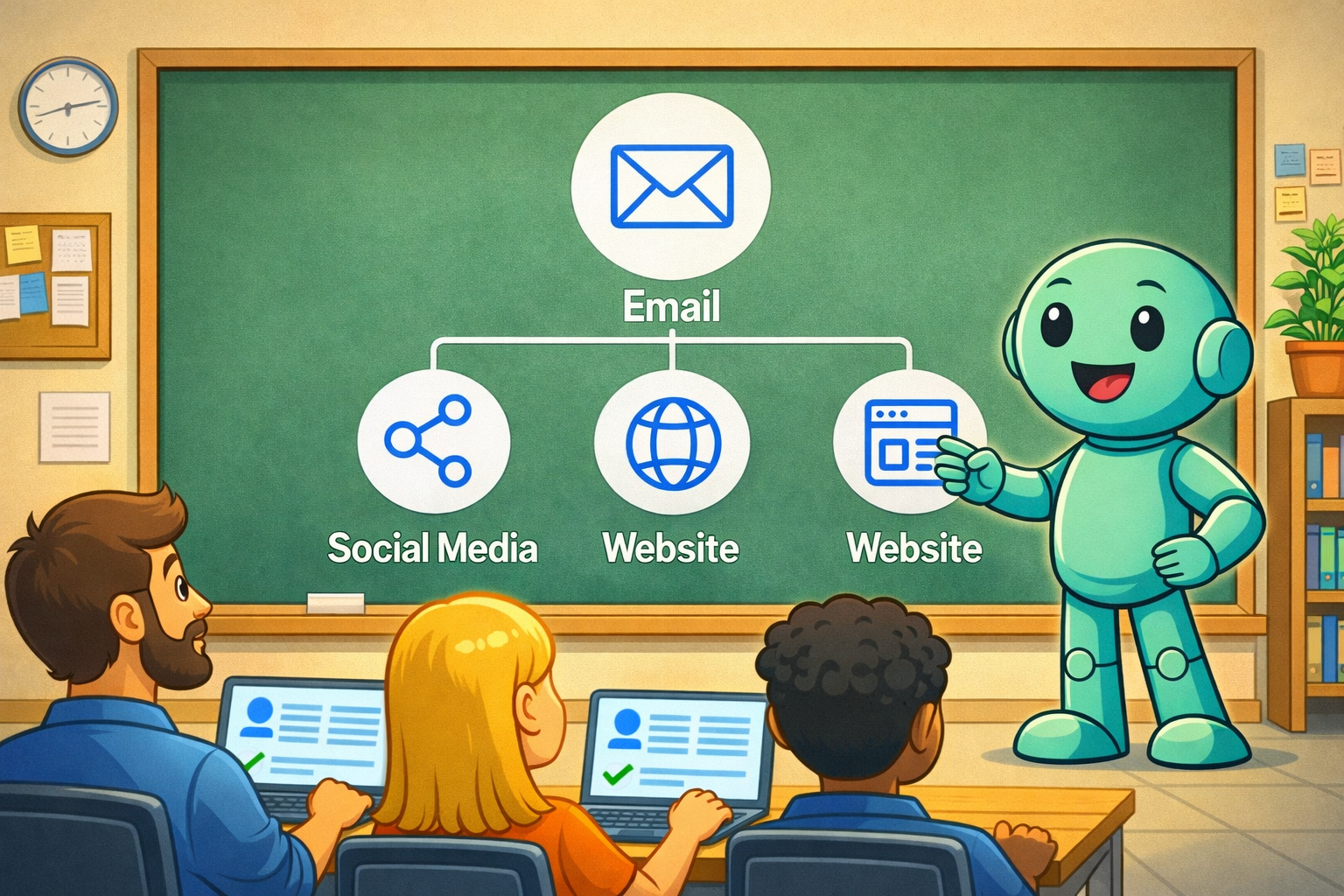
As you can see, a consistent voice flowing through every touchpoint is what ties the entire customer experience together.
Craft Detailed Target Audience Personas
You can't have a meaningful conversation if you have no idea who you're talking to. That’s where target audience personas come in. This isn’t just about surface-level demographics like age and location; it’s about creating rich, detailed profiles of your ideal customers.
Truly effective personas explore psychographics—their deep-seated motivations, their biggest challenges, their personal goals, and how they like to communicate. What keeps them up at night? Where do they go for advice? What kind of content actually helps them?
Answering these questions allows you to step directly into your customer’s shoes. This level of understanding transforms your messaging from a generic broadcast into a personal appeal. You stop shouting into the void and start speaking directly to someone's specific needs and dreams, making your communication infinitely more relevant and effective.
Distill Your Core Messaging and Value Proposition
Once you know who you are and who you’re talking to, it's time to nail down your core message and value proposition. This is your concise, compelling answer to the one question every single customer has: "Why should I choose you over everyone else?"
Your value proposition isn’t a boring list of features. It’s the unique benefit you promise to deliver. It has to be:
- Clear: Anyone should get it in five seconds or less.
- Specific: It should highlight the tangible results a customer can expect.
- Unique: It must set you apart from the competition.
This core message becomes the central thread woven through all your communication—from website copy to social media posts and sales pitches. Consistent repetition is key, as it helps your audience internalize exactly what makes you the right choice.
Your value proposition should be so clear that an existing customer could easily explain to a friend why they should use your brand. If they can't, your messaging isn't strong enough.
This clarity is your best weapon for cutting through the noise and building a memorable identity.
Master Strategic Channel Selection
Finally, the most powerful message on earth is useless if it’s delivered to an empty room. Channel selection is about strategically choosing the platforms where your target audience already hangs out. The goal isn’t to be everywhere—it's to be in the right places.
For instance, a B2B software company will almost certainly find more traction on LinkedIn than on TikTok. A visual-heavy fashion brand, however, would be right at home on Instagram and Pinterest. Let your audience personas guide you. Where do they spend their time, and how do they behave on each platform?
Matching your message format to the channel is just as important. A deep-dive article is perfect for your blog, while a quick, punchy tip is made for an Instagram Story. Great brand communication meets people where they are, respecting the unwritten rules of each platform to ensure your message is not only seen but truly heard.
Building Unbreakable Trust Through Authenticity
In a world drowning in ads, authenticity isn't just a nice-to-have anymore. It's the absolute foundation of a brand that lasts. Today's customers are sharper than ever, with a world of information at their fingertips and a healthy skepticism for marketing fluff. They don't just buy stuff; they buy into brands that share their values and act with genuine integrity.
This shift has made trust the most valuable currency a company can earn. You don't build it with clever slogans—you build it with consistent, transparent actions. The best brand communication strategies are built on a bedrock of honesty, proving that what a brand says is exactly what it does.
The Rise of Radical Transparency
The rules of the game have changed. Customers now expect—and demand—a clear window into a company's operations, its values, and its impact on the world. This call for transparency is reshaping how brands talk to their audience.
In fact, trust and authenticity are now the cornerstones of modern brand communication. Recent studies show that over 70% of consumers expect full transparency from businesses, and a staggering 75% say that this honesty directly impacts their decision to buy again.
This isn't about dodging bad press. It's about proactively inviting people into your world, being upfront about everything from your supply chain and sustainability efforts to your company culture.
Authenticity is the bedrock of modern brand loyalty. It’s about having the courage to show your flaws, share your values, and prove you have nothing to hide. This vulnerability is what transforms passive customers into passionate advocates.
Patagonia: A Case Study in Authentic Communication
Few brands walk the walk quite like Patagonia. The outdoor apparel company has cultivated an fiercely loyal community not just by making great gear, but by living its mission to "save our home planet" for everyone to see.
Patagonia’s communication is a masterclass in transparency:
- "Don't Buy This Jacket" Campaign: In a legendary move, they ran a Black Friday ad urging people to consume less and repair their old gear, taking a direct shot at mindless consumerism.
- The Footprint Chronicles: This feature on their website lets customers trace a product all the way from its raw materials to the final stitch, revealing the environmental impact of each item.
- Activism and Advocacy: The company famously donates a percentage of its sales to environmental nonprofits and isn't afraid to get loud about policy changes, proving its commitment is more than just marketing.
By consistently putting its values ahead of short-term profits, Patagonia has forged an unbreakable bond with its audience. Its authentic voice is a huge part of this success, and you can learn from some of the most unforgettable brand voice examples to see how other top companies do it.
Implementing a Transparency-First Approach
Embracing authenticity isn't a one-off campaign; it's a complete shift in how your business communicates from the inside out. It demands a commitment to honesty, even when it's uncomfortable.
Start by making sure your marketing messages reflect the reality of your brand, not some perfect, idealized version. When a problem arises, face it head-on with integrity and a clear plan to make things right. This is a long-term investment, but building genuine communication creates unshakable brand equity and a reputation that can weather any storm.
Forging Personalized Connections at Scale with Technology
The days of shouting one message at everyone and hoping some of it sticks are long gone. Today’s customers don’t just appreciate a personal touch; they demand it. Broadcasting a generic message is the fastest way to get ignored. This is why any effective brand communication strategy has to be built around experiences that feel relevant and designed for the individual.
Thankfully, we have the tools to build these one-on-one connections, even with an audience of millions. Through smart use of data analytics and artificial intelligence, brands can finally move past clumsy segmentation and start talking to people like, well, people. This means delivering content that resonates, suggesting products they’ll actually love, and offering support that solves a problem before it even starts.
This isn't just a fleeting trend. It's a fundamental rewiring of how brands build relationships. The goal is to make every single customer feel seen, heard, and genuinely valued.
Turning Raw Data into Remarkable Experiences
At its heart, personalization is simple: use what you know about someone to make their experience better. Every click, every purchase, every interaction is a breadcrumb. The real work is in ethically gathering those breadcrumbs and baking them into something that actually helps the customer.
Think of it like being a good friend. A friend remembers what you like, knows your backstory, and gives advice that’s actually useful. Technology, when used thoughtfully, allows a brand to be that good friend to millions of people simultaneously.
The magic isn't in harvesting data; it’s in using that data to create moments of genuine delight. Here are a few ways smart brands are making it happen:
- Dynamic Website Content: Ever notice how a homepage seems to change just for you? That's personalization at work, showing you banners or articles based on what you've looked at before.
- Personalized Email Campaigns: This goes way beyond just
[First Name]. It’s about sending emails with recommendations so good, they feel like they were hand-picked. - Predictive Customer Service: The best kind of support is the kind you don't have to ask for. Some companies can spot potential issues and reach out with a solution before you even realize there's a problem.
The goal of personalization is not just to sell more effectively, but to serve more thoughtfully. It transforms a transactional relationship into one built on understanding and mutual value.
The Real-World Impact of Personalization
Putting a technology-driven personalization strategy into place does more than just create warm feelings. It delivers cold, hard, measurable results. When your communication is relevant, customers pay more attention, stick around longer, and ultimately, spend more.
The numbers back this up. About 56% of marketing leaders are now actively investing in personalization technologies, and generative AI is quickly becoming a standard feature in most enterprise software. This investment is projected to add roughly $10 billion in revenue to the software industry alone. You can learn more by exploring the latest strategic communication trends from CSG.
This financial upside isn't an accident. It’s the direct result of a few key outcomes.
Driving Revenue and Loyalty Through Smarter Tech
A well-oiled personalization engine has a direct line to your bottom line, creating a powerful feedback loop. Better experiences create stronger customer relationships, which in turn fuels real, sustainable growth.
Let’s break down the tangible benefits:
- Increased Purchase Frequency: When customers constantly see things they're actually interested in, they come back more often. Amazon's "Customers who bought this also bought" feature is the classic, time-tested example of this in action.
- Higher Average Order Value: Smart, helpful suggestions can introduce people to complementary items they wouldn't have found on their own, boosting the value of each sale.
- Improved Customer Retention: A personalized experience makes people feel understood. That feeling gives them a powerful reason to stay loyal to you instead of jumping to a competitor. The recommendation algorithm from Netflix is a masterclass in this, designed to keep you engaged and subscribed month after month.
At the end of the day, using technology for personalization is no longer a "nice-to-have" in your brand communication strategy—it’s a necessity. It’s the most powerful way to cut through the noise, build real connections, and earn a loyal customer base that feels truly connected to your brand.
Turn Your People Into Your Best Messengers
Let's be honest, your most powerful marketing assets aren't the glossy ad campaigns or the big-budget celebrity endorsements. They're the people you see every day—the ones already on your payroll. A smart brand communication strategy understands that your own team members are the most authentic and believable storytellers you have.
When you empower them to share their experiences, you tap into a level of trust that polished corporate messages simply can't reach. Their genuine voices cut through the marketing noise, turning your internal culture into one of your most compelling external assets.
The Unmatched Power of Employee-Generated Content
We've all become experts at tuning out corporate ads. We crave authenticity, and we're far more likely to trust a recommendation from a real person than from a faceless brand. This is precisely why Employee-Generated Content (EGC) is so effective.
EGC is any content your employees create and share about your company—think social media posts, personal blog articles, or even short videos. It resonates because it feels real and unfiltered. This shift is backed by hard numbers, too. It’s no surprise that 77% of consumers prefer to shop with brands they follow on social media, and a staggering 81% say trust is a deal-breaker before they buy. You can dig deeper into how trust shapes purchasing decisions by checking out these key branding statistics from Exploding Topics.
When an employee shares their positive experience, it acts as powerful social proof. It’s a real-time testimonial that says, "This is a great place to work, and they make a great product." That's far more convincing than any advertisement could ever be.
This approach leans into a simple, fundamental truth: people trust people. By encouraging your team to share their stories, you unlock a communication channel that is both incredibly effective and remarkably cost-efficient.
How to Build a Thriving Employee Advocacy Program
Launching an employee advocacy program isn't about forcing your team to become marketers overnight. It's about building a supportive environment where they want to share their pride and expertise. A great program is built on clear guidelines, genuine motivation, and the right set of tools.
Here’s a practical framework to get started:
- Set Clear Goals and Guidelines: First, define what success looks like. Is the goal to boost brand awareness, generate more leads, or attract top talent? Then, provide simple, clear guidelines on brand voice, what to post, and any necessary disclosures (like using #ad or #employee). This ensures everyone is on the same page.
- Provide Valuable Content: Don't leave your team guessing what to share. Create a central hub—a "content library"—of pre-approved, interesting articles, company news, industry insights, and behind-the-scenes stories they can easily grab and post.
- Train and Educate Your Team: Offer workshops on social media best practices. Crucially, show them how building their personal brand online can also benefit their own careers. When they see it as a win-win, advocacy feels like an opportunity, not a corporate chore.
- Motivate and Recognize Participants: Keep the energy high with a little recognition. Give shout-outs to top advocates in company newsletters or team meetings. You could even introduce some friendly competition with leaderboards or small rewards for consistent sharing to make it fun.
By putting these pieces in place, you can systematically transform your employees from a silent workforce into your most passionate and believable brand ambassadors.
Measuring the Real Impact of Your Communication
A strategy without a way to measure it is really just a guess. You could pour your heart into creating the most authentic and engaging brand communication strategy on the planet, but if you can't prove it's working, you're essentially flying blind. It's time to look past the superficial vanity metrics—likes, shares, and follows—and start focusing on the numbers that actually show a real business impact.
Proper measurement is a game-changer for two big reasons. First, it gives you the hard data you need to justify your efforts (and budget) to stakeholders. Second, and maybe more importantly, it gives you the insights to keep getting better. You learn what's resonating so you can do more of it, and you see what's falling flat so you can fix it.
Moving Beyond Vanity Metrics
A high follower count might feel good, but it doesn't pay the bills. True measurement is about connecting your communication activities to tangible business outcomes. To do this well, you need to track a mix of metrics that paint a complete picture of your brand's health and influence.
A great place to start is with these core areas:
- Brand Sentiment Analysis: What’s the emotional tone of the conversation around your brand? Are people mostly positive, negative, or just neutral? Tools that scan social media and news sites can give you a surprisingly clear read on public perception.
- Share of Voice (SOV): This is all about how your brand’s visibility stacks up against the competition. It answers a simple question: "Of all the talk happening in our industry, how much of it is about us?"
- Campaign-Driven Website Traffic: By using analytics, you can draw a straight line from a specific campaign to a spike in website visitors. This shows you exactly which messages are compelling people to take action.
Thinking about these deeper metrics is like upgrading from a basic compass to a full-blown GPS. One gives you a general direction, but the other provides the precise coordinates you need to navigate with confidence and adjust your course on the fly.
Key Performance Indicators That Matter
To really see the bottom-line impact of your communication, you need to link your efforts directly to revenue and customer behavior. This is where you see how a strong brand perception actually influences people to buy.
Here are the essential KPIs that prove your strategy is delivering real value:
- Lead Generation and Conversion Rates: How many new leads did that webinar or blog series bring in? And, crucially, what percentage of those leads actually became paying customers? This ties your content directly to sales.
- Customer Acquisition Cost (CAC): As your brand gets stronger, it should theoretically become cheaper to win new customers. By tracking CAC, you can see if your brand-building work is making your sales funnel more efficient.
- Customer Lifetime Value (CLV): This represents the total amount of money a customer is expected to spend with you over their entire relationship. Great brand communication builds loyalty, which boosts CLV by encouraging repeat business and keeping customers around longer.
- Brand Equity: This is the ultimate goal—the commercial value that comes from how people feel about your brand name alone. It’s a bit more complex to track, but it's the truest sign of a successful strategy. To dive deeper, check out this practical guide on how to measure brand equity.
By setting up even a simple dashboard to watch these KPIs, you create a powerful feedback loop. You'll get a clear, data-backed view of which strategies are building your brand and driving growth, empowering you to make smarter decisions for the future.
Brand Communication FAQs
Even with a solid plan, questions are bound to pop up. As you start refining your brand communication strategy, you'll likely run into a few common hurdles. Getting clear on these points helps smooth out the path forward, so your team can bring your vision to life with confidence.
Think of this section as a final check-in before you go live, making sure every piece of the puzzle is locked in and ready for action.
How Do I Develop a Brand Voice?
Finding your brand voice is all about defining its personality. A great starting point is to pick three to five adjectives that really capture who you are. Are you innovative? Compassionate? Witty? Authoritative? Nail those down first.
Once you have your core traits, the next step is building a simple style guide. This isn't about writing a novel; it's about showing your team what that voice looks and sounds like in the wild. Include clear examples for different situations, like a casual social media post versus a more formal customer support email. This guide is your secret weapon for staying consistent everywhere you show up.
What’s the Difference Between Brand Communication and Marketing?
This is a big one, and the distinction is critical. Think of marketing as a specific set of activities aimed at promoting and selling. Its job is to drive sales and find new leads through campaigns, ads, and special offers.
Brand communication, on the other hand, is the whole universe. It’s every single touchpoint that shapes how people see your brand. Marketing is definitely part of it, but so is everything else:
- Customer Service: The tone your support team uses with a frustrated customer.
- Public Relations: The stories you pitch to the media and share with the world.
- Internal Culture: How your own employees talk about the company.
- Product Experience: The subtle messages sent by your product's design and ease of use.
Basically, marketing is one conversation, while brand communication is the entire relationship. It's the sum of all parts that tells your brand’s full story.
Marketing persuades someone to buy. Brand communication convinces them to believe. The first creates a transaction; the second builds lasting loyalty and trust.
How Often Should I Review My Communication Strategy?
A great communication strategy isn't a "set it and forget it" document. It’s a living guide that needs to evolve with your market. You should plan for a deep, comprehensive review of your entire strategy at least annually. This is your chance to step back and look at the big picture—your core pillars, audience personas, and long-term goals.
But don't wait a whole year to make tweaks. You should be keeping a close eye on your key performance indicators (KPIs) much more often, ideally on a monthly or quarterly basis. These regular check-ins let you make smart tactical adjustments, jump on new trends, and optimize your campaigns with fresh data. This nimble approach is what keeps your communication sharp and effective.
Ready to find a name that perfectly communicates your brand's unique identity? NameRobot offers a powerful suite of tools to help you generate, check, and lock down the perfect name for your business. Start your creative journey today at https://namerobot.com.