Creative Business Name Ideas You Can Trust
Choosing a name is one of the most foundational decisions an entrepreneur makes. A powerful name can capture imagination, communicate value, and become a brand's greatest asset, while a weak one can cause confusion and hinder growth. The challenge lies in finding a name that is not only memorable and unique but also available and aligned with your long-term vision.
Want to turn this into real name ideas? Open Naming Toolbox to generate, refine, and compare naming options while you read.
This guide moves beyond generic advice to provide a strategic framework for brainstorming. We will explore nine distinct categories of creative business name ideas, each backed by real-world examples and actionable tips. You will learn to identify and apply specific naming conventions that fit your brand's personality and strategic goals.
Whether you're launching a tech startup, a boutique agency, or a local shop, these structured approaches will equip you to develop a name that resonates with your audience and stands the test of time. This list is designed to be a practical resource, transforming the daunting task of naming into an inspiring creative journey. We'll examine everything from descriptive and metaphorical names to founder-based and invented brand names, giving you the tools to make a confident and strategic choice.
1. Descriptive Names
Descriptive names are a foundational strategy for a reason: they communicate exactly what your business offers, leaving no room for confusion. This approach prioritizes clarity and function, immediately telling potential customers who you are and what problem you solve. By directly stating your service or product, you build instant recognition and make your business easy to find for customers actively seeking your solutions.
Think of well-known examples like General Motors or The Home Depot. Their names act as a straightforward label, effectively pre-qualifying customers and streamlining the marketing process. This is one of the most practical and creative business name ideas for service-based companies or retailers where directness is a key advantage.
Key Benefits of a Descriptive Name
The power of a descriptive name lies in its simplicity and efficiency. It works as a built-in marketing tool that functions 24/7. This visual summary highlights the three core advantages of this naming convention.
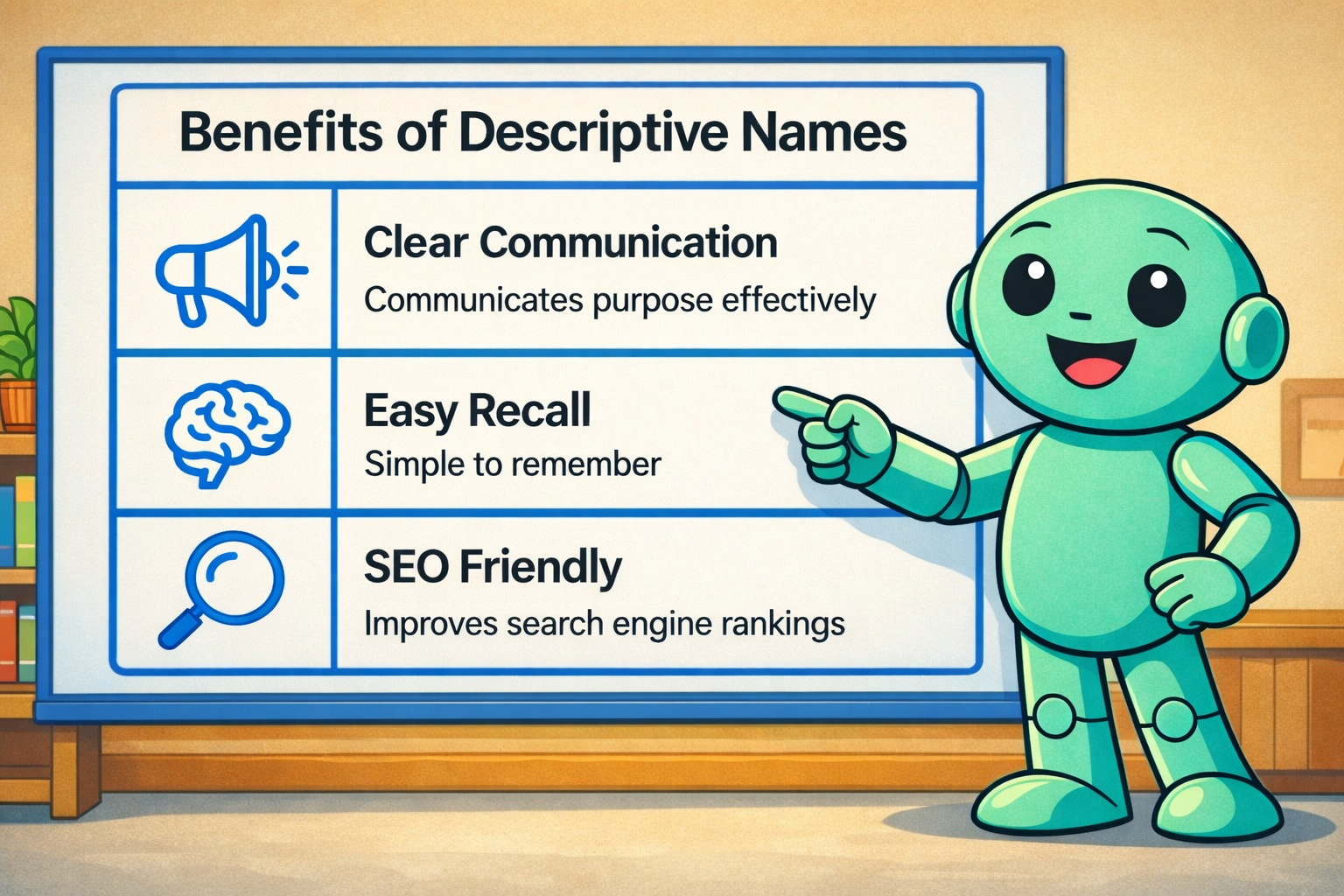
These benefits show how a clear, descriptive name can significantly impact brand recall, customer understanding, and online visibility right from the start.
How to Implement This Strategy
To create an effective descriptive name, focus on precision and simplicity. Avoid industry jargon that could confuse your audience. Instead, use strong, action-oriented words that convey a direct benefit.
- Be Specific: Instead of "General Services," consider "Precision Lawn Care."
- Test for Clarity: Ask a group of potential customers what they think your business does based on the name alone.
- Check Availability: Always ensure the corresponding domain name and social media handles are available before finalizing your choice.
2. Abstract/Invented Names
Abstract or invented names are completely new words created for a brand, offering a blank slate to build a powerful and unique identity. Unlike descriptive names, these have no inherent meaning, which provides maximum creative freedom. This strategy allows a business to define its own story and values without being tied to existing words or concepts, making it a bold choice among creative business name ideas.
Think of iconic brands like Kodak, Spotify, or Zillow. Their names were meaningless at first but are now synonymous with their respective industries. This approach is highly effective for companies aiming for global reach and a distinct market position, as a unique name is easier to trademark and own digitally.
Key Benefits of an Abstract Name
The primary advantage of an invented name is its uniqueness. It provides a completely ownable brand asset that stands out in a crowded marketplace. This distinctiveness makes it highly memorable once brand recognition is established.
The power of an abstract name is its potential to become a proprietary term for your product or service. This approach is ideal for innovators and disruptors who want to create a brand that is truly one-of-a-kind. For more details on this strategy, you can learn more about inventing names from scratch.
How to Implement This Strategy
Creating a successful abstract name requires careful thought and creativity. The goal is to invent a word that is memorable, easy to pronounce, and phonetically pleasing, while also being devoid of negative connotations in other languages.
- Focus on Sound: Combine word fragments, prefixes, and suffixes to create a name that sounds good and is easy to say.
- Test for Meaning: Research your invented name to ensure it doesn't have an unintended or negative meaning in other cultures or languages.
- Build a Strong Story: Since the name is a blank canvas, you must invest heavily in marketing and branding to attach meaning and emotion to it.
3. Compound Names
Compound names are created by combining two or more existing words to form a new, unified concept. This strategy blends familiarity with innovation, leveraging the established meanings of individual words to create a fresh and memorable business identity. By joining recognizable terms, you can craft a name that is both intuitive and distinctive, suggesting your brand’s core function or value in a creative way.
Consider well-known brands like YouTube (You + Tube) or PayPal (Pay + Pal). Their names are simple, powerful, and immediately convey a sense of purpose. This approach is one of the most effective creative business name ideas for tech startups and modern brands because it can generate a unique name that is easy to remember, spell, and trademark.
Key Benefits of a Compound Name
The strength of a compound name lies in its ability to be both meaningful and unique. It acts as a clever shorthand for your business model, combining two ideas into a single, compelling brand identity. This name type is particularly effective for building a strong, ownable brand from the ground up.
These names often feel modern and dynamic, striking a perfect balance between being descriptive and being abstract. This allows for greater brand flexibility as your business grows and evolves over time, while still hinting at its original mission.
How to Implement This Strategy
To create a powerful compound name, brainstorm words related to your industry, your audience, and the value you provide. Experiment by mixing and matching them to find a combination that is smooth, memorable, and meaningful.
- Complementary Words: Choose words that reinforce each other, like "FedEx" (Federal Express), which combines speed and reliability.
- Test Phonetics: Say the name out loud to ensure it flows well and is easy to pronounce. Avoid awkward or clunky combinations.
- Check Availability: As with any name, verify that the domain and social media handles are available. The uniqueness of a compound name often makes this step easier.
4. Metaphorical Names
Metaphorical names use symbolism and analogy to convey a brand's core attributes, values, or essence. Instead of describing what a business does directly, this approach creates an emotional connection by tapping into familiar concepts and imagery. This method allows a brand to tell a deeper story and build a memorable identity that goes beyond its product or service.
Think of iconic examples like Amazon, named after the vast and powerful river to suggest an extensive selection, or Nike, named for the Greek goddess of victory. These names are powerful because they evoke feelings and ideas, making them stand out as truly creative business name ideas. A metaphorical name invites customers to associate your brand with a larger, more compelling concept.
Key Benefits of a Metaphorical Name
The strength of a metaphorical name is its ability to create a rich brand narrative and emotional resonance. It transforms a simple name into a powerful storytelling tool that distinguishes your business in a crowded marketplace. This strategy can forge a strong, lasting bond with your audience.
These names are highly memorable and can scale with a business as it grows or pivots, since they are tied to a concept rather than a specific product. If you need more naming inspiration for this approach, you can learn more about finding metaphorical business names and other creative ideas online.
How to Implement This Strategy
Creating a successful metaphorical name requires a deep understanding of your brand's core identity. Focus on a single, powerful idea you want to own in the minds of your customers.
- Align with Brand Values: Choose a metaphor that authentically reflects your company’s mission and personality.
- Test Audience Associations: Ensure your target audience understands and positively connects with the intended metaphor.
- Avoid Obscure References: Select metaphors that are widely understood and culturally sensitive to avoid confusion or misinterpretation.
5. Founder-Based Names
Founder-based names leverage the personal identity of the business owner, linking the brand directly to their reputation, story, and commitment. This strategy imbues a company with a human touch, suggesting craftsmanship, heritage, and personal accountability. By putting a name on the line, founders communicate a powerful message of trust and dedication to their customers.
Consider legendary examples like Ford, Disney, and Dell. These names are not just labels; they are legacies built on the vision and drive of their namesakes. This approach is one of the most classic and creative business name ideas for brands in professional services, artisanal goods, or any field where a personal guarantee of quality is a key selling point.
Key Benefits of a Founder-Based Name
The primary advantage of a founder-based name is the instant infusion of personality and credibility. It forges a direct, personal connection with the audience, making the brand feel more authentic and approachable. This can be a significant differentiator in a crowded marketplace where consumers crave genuine connections.
A name rooted in a real person's identity often carries an implicit promise of quality and passion. It tells a story that customers can invest in, transforming a simple transaction into a relationship. This strategy is particularly effective for building a loyal community around a strong founder narrative.
How to Implement This Strategy
To successfully use a founder-based name, the focus must be on building a strong personal brand alongside the company brand. The founder's story and values become intertwined with the business's identity.
- Ensure Pronounceability: Choose a name that is easy for your target audience to say, spell, and remember.
- Build the Narrative: Develop and share the founder's story. Why did they start the business? What is their passion? This narrative becomes a core marketing asset.
- Plan for the Future: Consider the long-term implications. Think about how the brand will evolve, especially if a leadership transition is a possibility down the road.
6. Geographic Names
Geographic names root your business in a specific location, leveraging the reputation, heritage, or identity of a place to build brand equity. This strategy can suggest local expertise, a specific quality associated with a region, or a focus on a particular market. By connecting your brand to a map, you create an immediate sense of origin and authenticity, which can be a powerful differentiator.
Think of iconic brands like Bank of America or Southwest Airlines. Their names instantly communicate their scope and operational focus, building trust through familiarity and a clear sense of place. This approach is one of the most effective creative business name ideas for businesses that want to highlight their local roots or appeal to patriotic or regional pride.
Key Benefits of a Geographic Name
The primary advantage of a geographic name is its ability to create an instant mental shortcut for customers, associating your brand with the known attributes of a location. It can imply a certain standard of quality, a specific lifestyle, or a commitment to a community.
These benefits demonstrate how linking your brand to a location can build trust, define your market, and create a strong, memorable identity. A well-chosen geographic name serves as a strategic anchor for your entire brand story.
How to Implement This Strategy
To use a geographic name effectively, select a location that adds positive value and aligns with your business goals. The name should enhance your brand story, not limit it.
- Choose Relevant Locations: Select a place known for the quality you want to project, like "Napa Valley Wines" or "Swiss Watch Co."
- Consider Your Scope: Ensure the name won't restrict future growth. If you plan to expand beyond your initial city, a state or regional name might be more appropriate.
- Test for Recognition: Ask people outside your target area if the name conveys the right message. A name that resonates locally might be confusing or meaningless to a broader audience.
- Pair with a Descriptor: Combine the location with a descriptive word for clarity, such as "Boston Scientific" or "Arizona Iced Tea."
7. Acronym Names
Acronyms are a strategic way to simplify a long or complex business name into a short, memorable, and powerful brand identifier. This approach condenses a multi-word name into its initial letters, creating a distinct and often more modern-sounding alternative. By turning a mouthful into a punchy abbreviation, you can build a brand that is easier to recall, pronounce, and use across marketing materials.
Consider iconic brands like IBM (International Business Machines) or KFC (Kentucky Fried Chicken). Their acronyms have become so dominant that the original full names are now secondary. This is one of the most effective creative business name ideas for companies with a descriptive but lengthy name, or for those aiming to establish a concise, corporate-sounding identity.
Key Benefits of an Acronym Name
The primary advantage of an acronym is its ability to create a sleek and modern brand identity from a more traditional or descriptive name. It simplifies branding and makes your company easier for customers to remember and discuss.
These benefits demonstrate how a well-chosen acronym can streamline your branding and improve market positioning.
How to Implement This Strategy
Creating a successful acronym involves more than just picking the first letter of each word. The result must be pronounceable, unique, and free of negative connotations. Careful consideration is key to avoiding an acronym that is confusing or easily forgotten.
- Check Pronunciation: Ensure the acronym is easy to say. A clunky or awkward-sounding acronym can hinder word-of-mouth marketing.
- Test for Unintended Meanings: Research the letter combination to make sure it doesn't spell an undesirable word or have a negative meaning in other languages.
- Consider the Full Name: Decide if you will use the full name alongside the acronym initially to build recognition, as many successful brands have done. For more insights on this approach, you can learn more about acronym naming strategies on Namerobot.
8. Portmanteau Names
Portmanteau names are created by blending parts of two or more words to form a completely new word that combines their original meanings. This technique produces unique, memorable names that inherently suggest innovation, synergy, and efficiency. It’s a modern approach that conveys a forward-thinking brand identity from the very first impression.
This strategy is one of the most popular creative business name ideas, particularly within the tech and digital sectors. Think of industry giants like Netflix (Net + Flix) or Pinterest (Pin + Interest). Their names are not just catchy; they cleverly encapsulate the core function of the business in a single, invented word, making them both distinctive and descriptive.
These benefits demonstrate how a well-crafted portmanteau can provide a significant competitive advantage by being inherently memorable, unique, and suggestive of the brand's purpose.
How to Implement This Strategy
Creating a successful portmanteau requires a balance of creativity and clarity. The goal is a name that sounds natural and is easy to understand, not a forced or confusing combination.
- Brainstorm Core Concepts: List keywords related to your product, service, and customer benefit. Experiment by combining the beginning of one word with the end of another.
- Prioritize Phonetic Flow: Say the potential names out loud. A great portmanteau, like Shopify (Shop + Simplify), is smooth and easy to pronounce.
- Ensure the Meaning is Clear: The blended meaning should be intuitive. If people can't guess what your business does from the name, the portmanteau has failed.
- Check Digital Availability: Because these names are unique, they often have better availability for domains and social media handles. Secure these assets immediately.
9. Emotional Names
Emotional names are crafted to connect with customers on a deeper level by evoking a specific feeling, aspiration, or state of mind. Instead of describing a product's function, this strategy focuses on the emotional benefit or experience the brand provides, creating a powerful and memorable association that builds loyalty beyond the transaction.
Consider iconic brands like Triumph motorcycles or Joy dish soap. These names don't describe the product; they sell a feeling of victory, achievement, or happiness. This approach is one of the most effective creative business name ideas for brands in the lifestyle, wellness, and consumer goods sectors, where the customer’s experience is just as important as the product itself.
Key Benefits of an Emotional Name
The primary advantage of an emotional name is its ability to build a strong, lasting bond with the target audience. It taps into the core human desires and feelings that drive purchasing decisions, making the brand feel more personal and relatable. This strategy helps differentiate a business in a crowded market by selling an experience, not just a product.
By linking your brand to a positive emotion, you create an intrinsic value that customers identify with. This fosters brand loyalty and transforms customers into advocates who share the feeling your brand represents, leading to powerful word-of-mouth marketing.
How to Implement This Strategy
To create an impactful emotional name, you must deeply understand the feelings you want your target audience to associate with your brand. The key is authenticity and a consistent brand experience that delivers on the name's promise.
- Identify Core Feelings: Brainstorm the primary emotions your product or service elicits. Is it comfort, excitement, bliss, or confidence?
- Test Emotional Resonance: Present name ideas to your target demographic and gauge their gut reactions. Ensure the intended emotion is being conveyed clearly.
- Align with Brand Values: The chosen emotion must be an authentic reflection of your company’s mission and the experience you provide. A name like "Bliss" for a spa must be matched by a genuinely blissful customer experience.
Creative Business Name Types Comparison
| Name Type | Implementation Complexity ? | Resource Requirements ⚡ | Expected Outcomes ? | Ideal Use Cases ? | Key Advantages ⭐ |
|---|---|---|---|---|---|
| Descriptive Names | Low ? | Low ⚡ | Clear communication, easy recognition ? | Single-focus businesses, service providers ? | Immediate understanding, better SEO, trust ⭐ |
| Abstract/Invented Names | High ? | High ⚡ | Unique brand identity, flexible growth ? | Brands seeking uniqueness, global scalability ? | Strong trademark, limitless branding ⭐ |
| Compound Names | Medium ? | Medium ⚡ | Memorable blends, balances familiarity ? | Tech, innovative companies ? | Combines meaning, easy recognition ⭐ |
| Metaphorical Names | Medium-High ? | Medium ⚡ | Emotional resonance, storytelling impact ? | Brands emphasizing values, storytelling ? | Evokes emotion, timeless appeal ⭐ |
| Founder-Based Names | Low-Medium ? | Low ⚡ | Personal brand trust, heritage ? | Luxury, professional services, heritage brands ? | Strong personal connection, authenticity ⭐ |
| Geographic Names | Low ? | Low ⚡ | Regional recognition, implies quality ? | Local/regional markets, heritage brands ? | Leverages location reputation, easy recall ⭐ |
| Acronym Names | Medium ? | Medium ⚡ | Simplified branding, modern feel ? | Long/complex names, international brands ? | Short, memorable, versatile ⭐ |
| Portmanteau Names | Medium-High ? | Medium ⚡ | Unique new words, suggests innovation ? | Startups, digital platforms, app developers ? | Creative, trademarkable, memorable ⭐ |
| Emotional Names | Medium ? | Medium ⚡ | Strong emotional bonds, aspirational appeal ? | Brands focusing on customer experience ? | Evokes feelings, differentiates ⭐ |
Activating Your Naming Strategy: Next Steps to Secure Your Brand
We have explored a comprehensive toolkit of naming strategies, from the direct clarity of Descriptive Names to the unique memorability of Abstract and Invented Names. You've seen how combining words to create Compound Names like FedEx or blending them into clever Portmanteaus like Pinterest can build powerful brand identities. We delved into the evocative power of Metaphorical Names, the personal touch of Founder-Based Names, and the community connection of Geographic Names. Each approach offers a distinct pathway to finding creative business name ideas that resonate.
The journey from a long list of possibilities to a single, powerful brand name is a process of strategic refinement. The goal is no longer just brainstorming; it is validation. A name that sounds perfect in a meeting room can quickly become a liability if it fails the critical tests of market viability and legal availability.
From Creative Idea to Market-Ready Asset
Your next steps are crucial and require a shift from creative thinking to practical due diligence. The most brilliant name is useless if it's already taken or creates legal complications. This validation phase is non-negotiable and protects your future brand equity.
Here is a structured checklist to guide you through this essential process:
- Check Domain Availability: Is the .com domain available? If not, are alternative TLDs (like .io, .ai, .co) a strategic fit for your brand, or will they cause confusion? A clean, intuitive domain is a fundamental asset.
- Secure Social Media Handles: Consistency is key. Verify that your desired name is available across all relevant platforms: Instagram, TikTok, LinkedIn, X (formerly Twitter), Facebook, and others. An inconsistent digital presence can dilute your brand message.
- Conduct a Trademark Search: This is the most critical step. Perform a preliminary search on the U.S. Patent and Trademark Office (USPTO) database or your country's equivalent. You must ensure your name doesn't infringe on existing trademarks within your industry, which could lead to costly legal battles.
- Gather Audience Feedback: Test your top 3-5 contenders with a small group from your target audience. Does the name evoke the right emotions? Is it easy to pronounce and spell? This feedback provides invaluable insight into how your name will be perceived in the real world.
Your Name is Your First Promise
Ultimately, a great business name does more than just identify your company; it makes a promise. It’s the first piece of marketing your customers will encounter and the foundation upon which your entire brand story is built. It should be an asset that grows in value over time, becoming synonymous with quality, trust, and the unique experience you provide. By moving from a wide array of creative business name ideas to a single, thoroughly vetted option, you are not just picking a name; you are making a strategic investment in your brand's long-term success. Choose a name you can own with pride and build with confidence for years to come.
Ready to streamline your validation process and find a name that’s truly available? NameRobot offers a suite of tools, from AI-powered generators to instant domain and trademark checks, designed to help you navigate the entire naming journey. Move from brainstorming to a market-ready brand with confidence at NameRobot.